
Dong Thap Provincial People’s Council: Notable Achievements in a Year of Major Transitions
(DTO) 2025 marked a pivotal turning point for the country in general and Dong Thap Province in particular, as the government implemented the National Assembly Standing Committee’s resolution on the merger of provincial-level administrative units.
Amid this transition marked by a substantial workload, the Provincial People’s Council upheld its sense of responsibility, not only ensuring stable administrative operations but also delivering positive results in overseeing and addressing urgent provincial matters.
STRONG IMPRESSIONS FROM FLEXIBILITY AND DECISIVE ACTION
Looking at the performance of the Dong Thap Provincial People’s Council in 2025 reveals a spirit of urgency and high responsibility.
With 14 successfully convened sessions, the Council reviewed and approved 178 resolutions (including 56 regulatory resolutions and 122 individual resolutions, among them 8 related to organizational and personnel matters following the provincial merger).
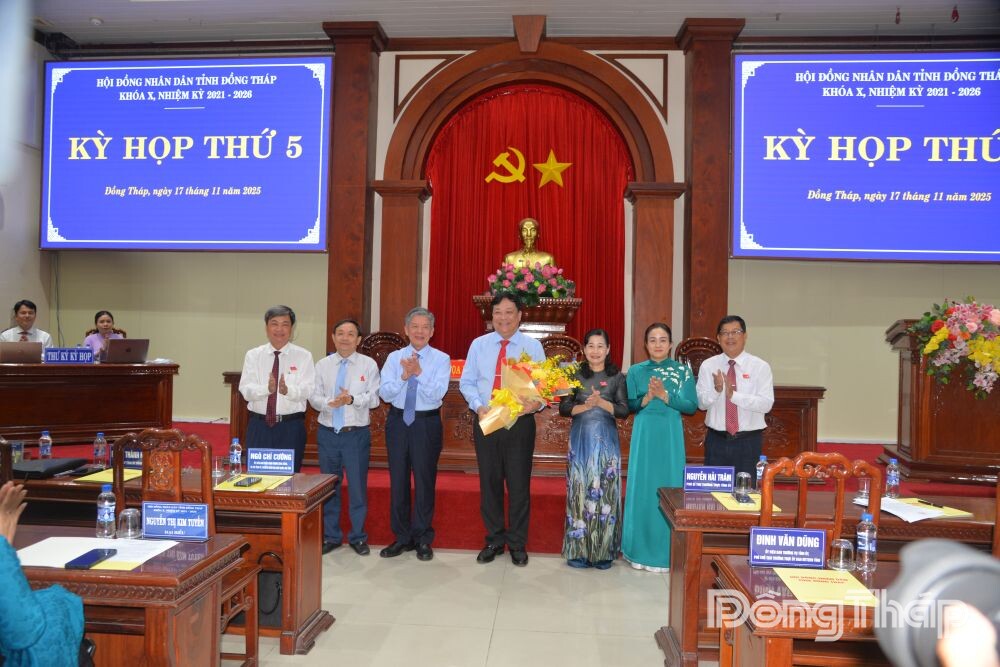
These are more than statistical numbers. They form the legal “backbone” for stabilizing socio-economic conditions and structuring the administrative system immediately after the merger.
The Council also introduced improvements in inspection, field surveys, and policy explanations.
According to Mr. Tran Thanh Nguyen, Member of the Standing Committee of the Provincial Party Committee and Vice Chairman of the People’s Council, the Standing Committee of the People’s Council conducted a thematic supervision of the Provincial People’s Committee on: “Preventing and controlling wastefulness in state management related to public investment planning; public asset management; land use management; and the operation of cultural and sports institutions across the province.”
Speaking at the year-end session of 2025, Ms. Chau Thi My Phuong, Deputy Secretary of the Provincial Party Committee and Chairwoman of the People’s Council, emphasized that 2026 holds special significance, as it is the first year implementing the five-year socio-economic development plan (2026-2030).
The outcomes of 2026 will have direct and lasting impacts on completing the goals of the entire term and the five-year development roadmap.
Therefore, she urged the People’s Committee at all levels and departments to swiftly translate the objectives and targets into concrete action plans with clear timelines and resources.
During implementation, it is essential to balance economic growth with cultural and social development, ensure social welfare, promote administrative reform, and maintain national defense and security.
A crucial political task is to thoroughly and lawfully prepare for the 16th National Assembly election and the election of People’s Councils at all levels for the 2026-2031 term, ensuring close coordination and fostering democratic participation.
She also called on the Council’s agencies and each delegate to strengthen strict oversight from the earliest stages, while closely cooperating with the Vietnam Fatherland Front to listen to and address voters’ concerns promptly, thereby building the highest level of public consensus and ensuring that approved resolutions truly come to life.
After the supervision process, the Standing Committee of the Provincial People’s Council reported the results and issued a conclusion outlining six key recommendations for the Provincial People’s Committee to implement, aiming to improve efforts in preventing and controlling wastefulness in state management related to public investment planning, public asset management, and land use management in the coming period.
In addition, the Standing Committee of the Provincial People’s Council organized four thematic survey teams on: the site clearance and handover of the ground area at the approach of Hong Ngu Bridge and Sa Dec Bridge under Phase 1 of the project to increase vertical clearance of national inland waterway crossings in the southern region; local budget funds entrusted through the Vietnam Bank for Social Policies for lending to poor households and other policy beneficiaries in Dong Thap during 2020-2025; conditions for implementing the National Target Program on Drug Prevention and Control through 2030 in Dong Thap Province; collection of school fees and charges at the start of the 2025-2026 academic year at some schools across the province.
Following these surveys, the Standing Committee put forward specific recommendations for the Provincial People’s Committee and state management agencies to make necessary adjustments and ensure compliance with the law. At the same time, it proposed that central-level authorities review and amend regulations that are no longer appropriate.
The Council also monitored the implementation progress of the Provincial People’s Committee and relevant departments in addressing recommendations made since the mid-2024 session of the Provincial People’s Council.
The Provincial People’s Committee and related departments have fully implemented all 21 recommendations made by the supervision teams of the Provincial People’s Council, its Standing Committee, and other committees.
Citizen reception, guidance, and the handling of complaints and denunciations were given close attention. The Standing Committee regularly monitored how competent agencies resolved citizens’ petitions and ensured timely responses in accordance with legal requirements.
Meetings with voters, the compilation of opinions and petitions, and the reporting of response results from the Provincial People’s Committee and relevant agencies were carried out fully, meeting the expectations of voters.
Notably, voter meetings were conducted at an impressive scale: 436 meetings were held with nearly 46,000 voters participating. The more than 2,383 collected opinions and petitions reflected genuine public concerns, ensuring that the Council’s decisions remained grounded in real-life needs.
Importantly, the timely review and resolution of overlapping resolutions issued by the two former provinces prior to the merger helped establish a unified legal framework, creating convenience for both citizens and businesses throughout the newly merged province.
IMPROVING PERFORMANCE IN A NEW CONTEXT
At the recent year-end session of the Provincial People’s Council, delegates acknowledged that thanks to a wide range of coordinated and innovative measures, the activities of People’s Councils at all levels have become increasingly substantive and effective. These efforts have contributed significantly to the province’s political system in fulfilling its comprehensive socio-economic development goals and building an ever more prosperous and orderly Dong Thap.
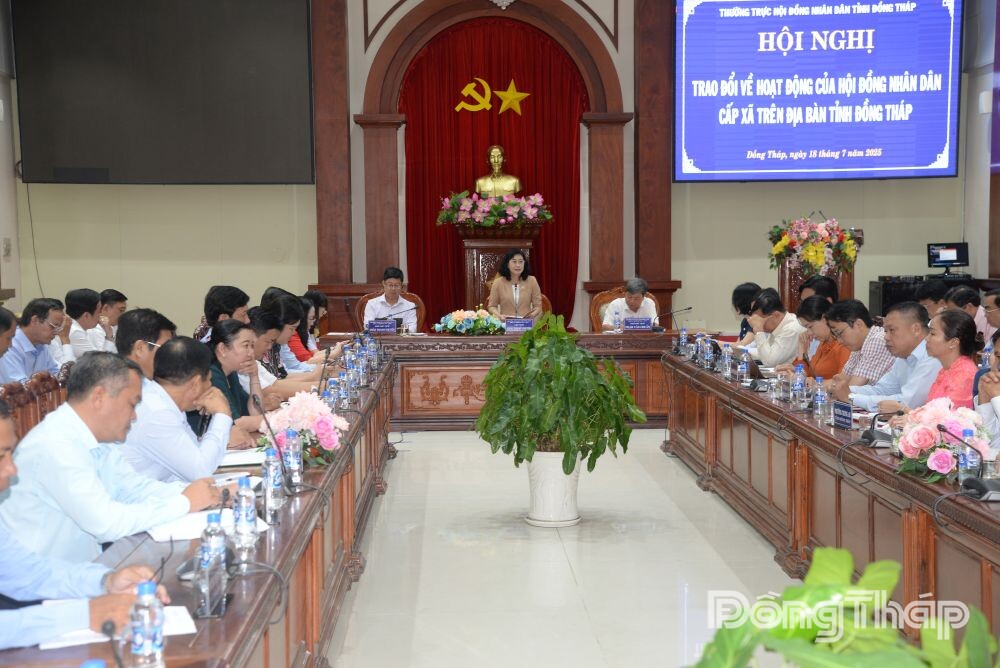
However, the Council’s operations still encountered certain limitations. The report of the Standing Committee candidly pointed out key shortcomings that must be addressed soon, such as the failure to implement the thematic supervision scheduled for 2025, and the irregular organization of citizen-reception activities for provincial delegates.
The objective reason system from the overwhelming workload following the administrative merger, which required the Council to prioritize time for field surveys to resolve urgent issues arising at the grassroots level.
Additionally, citizen-reception activities have been relatively subdued since the merger on July 1, 2025, mainly due to the fact that people were not coming to meet delegates during scheduled reception sessions.
Entering 2026, the Dong Thap Provincial People’s Council has laid out a roadmap that is both demanding and clearly defined.
The foremost political task is to coordinate the successful organization of the election of deputies to the 16th National Assembly and People’s Councils at all levels for the 2026-2031 term.
This is a decisive step in consolidating the provincial government apparatus for the new period.
At the same time, the Council will continue to innovate its methods of operation with strong digitalization by promoting digital transformation in organizing sessions and managing delegate information.
Supervision activities will be more results-oriented, closely monitoring the implementation of post-supervision recommendations, and requiring periodic reports to thoroughly resolve long-standing issues.
Efforts will also be intensified at the grassroots level, enhancing the responsibility of delegates in conducting citizen-reception activities and fulfilling promises made to voters.
With the foundations established in 2025, voters have every reason to expect a more capable and modern people’s elected body, one that truly serves as a strong bridge between the will of the people and the province’s development policies in 2026.
By HOAI THU
Translated by ANH DUC