
Dong Thap Provincial People’s Council Opens 5th Session
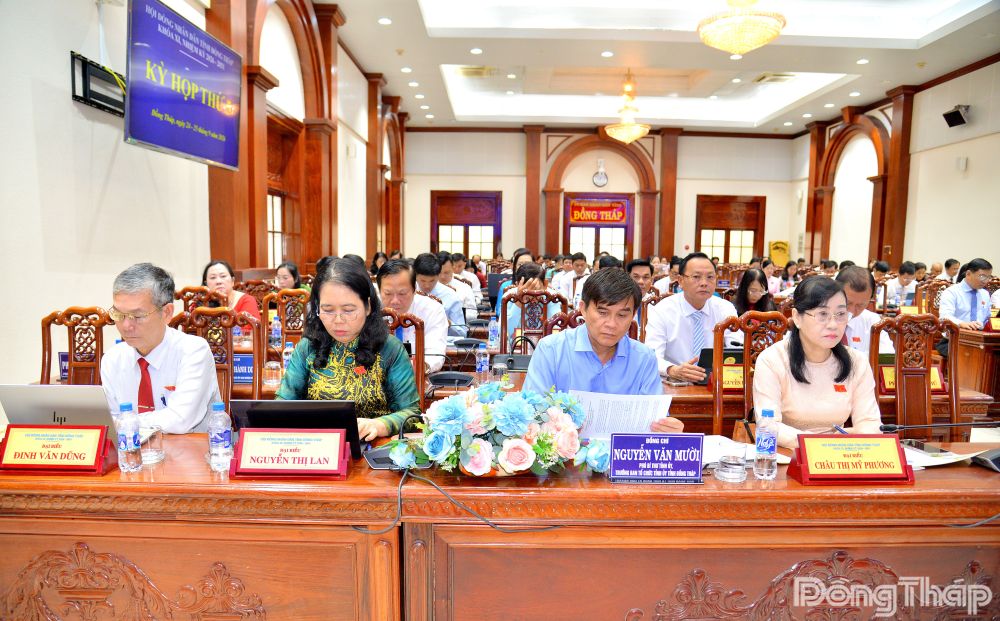
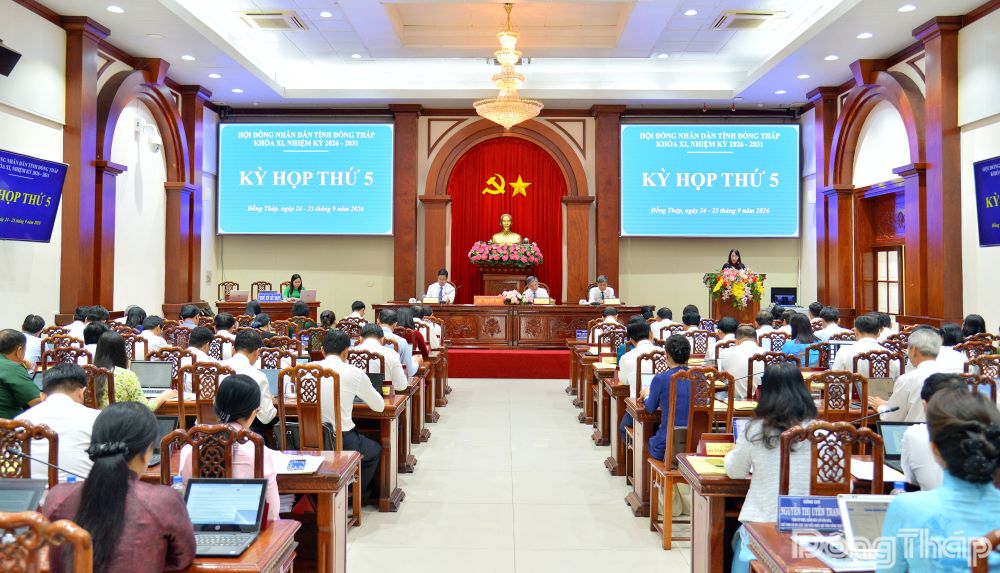
(DTO) On the morning of September 24, the 11th-term Dong Thap Provincial People’s Council, 2026-2031 tenure, opened its 5th session, a thematic session.
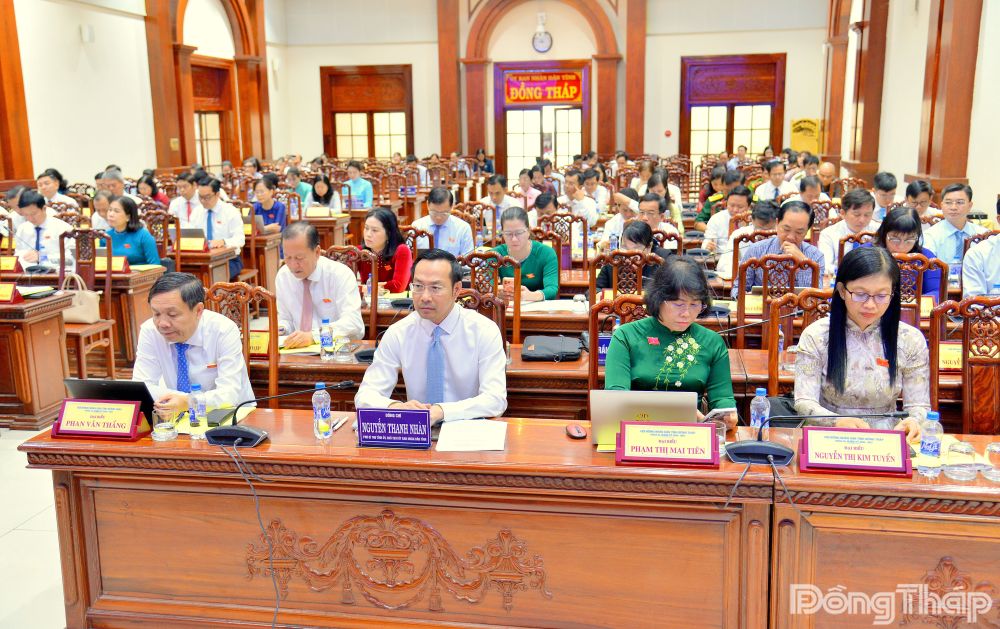
Attending the session were Ngo Chi Cuong, Member of the Party Central Committee, Secretary of the Provincial Party Committee and Chairman of the Provincial People’s Council; Phan Van Thang, Standing Deputy Secretary of the Provincial Party Committee and Chairman of the Vietnam Fatherland Front Committee of Dong Thap Province; Chau Thi My Phuong, Deputy Secretary of the Provincial Party Committee and Head of the Dong Thap Delegation of the 16th National Assembly; Nguyen Thanh Nhan, Deputy Secretary of the Provincial Party Committee and Chairman of the Provincial People’s Committee; members of the Provincial Party Committee’s Standing Board; representatives of the State Audit Office of Vietnam Region 9; Vice Chairpersons of the Provincial People’s Council, heads and deputy heads of its committees; and 78 of the 85 deputies of the 11th Provincial People’s Council.
Ngo Chi Cuong, Chairman of the Provincial People’s Council; Pham Van Chuan, Member of the Provincial Party Committee’s Standing Board and Standing Vice Chairman of the Provincial People’s Council; and Tran Thanh Nguyen, Member of the Provincial Party Committee’s Standing Board and Vice Chairman of the Provincial People’s Council, presided over the session.
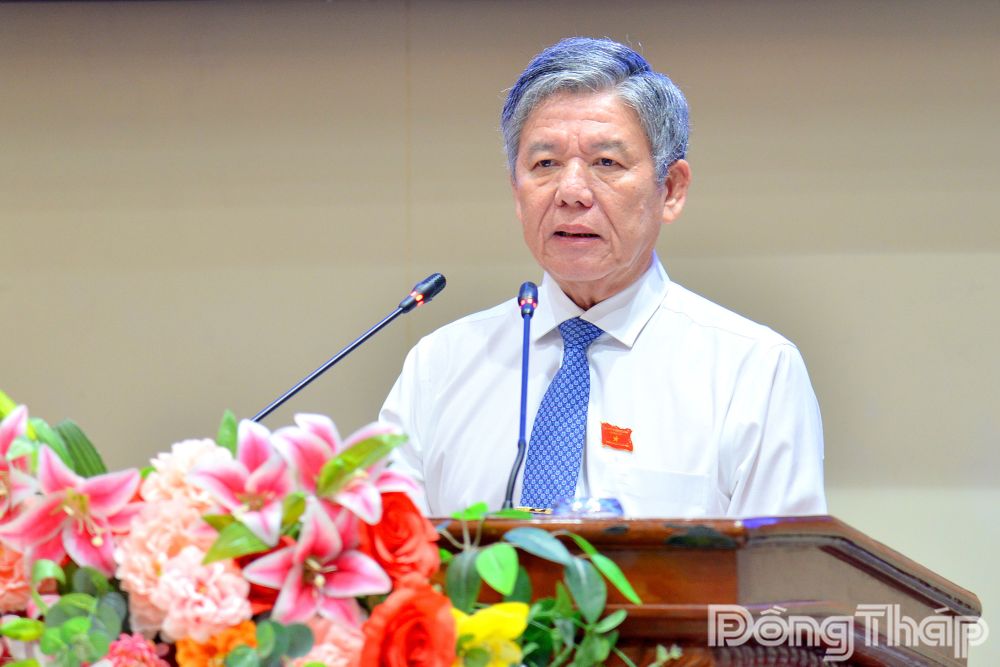
In his opening remarks, Ngo Chi Cuong said that during the first nine months of 2026, despite many difficulties, the province’s socio-economic situation continued to show positive changes thanks to the efforts of the entire political system, the business community and the people. State budget revenue was estimated at more than 18.076 trillion VND, exceeding 76% of the annual estimate, while export turnover reached more than 7.57 billion USD.
The province attracted and licensed a number of investment projects and began construction of a 470-hectare industrial park. Tourism also continued to recover, welcoming more than 5.95 million visitors and generating total tourism revenue of 3.35 trillion VND. The province also focused on addressing bottlenecks in digital transformation and initially completed efforts to streamline the organizational structure, including the merger of some hamlets and residential clusters.
The health insurance coverage rate reached 96.7%, while more than 2.8 million people received periodic health checkups and free screening, equivalent to 82.68% of the population. The province also completed the restructuring of its network of public preschools and general education institutions. As a result, the number of education and training public service units across the province was reduced by 638 compared with the second quarter of 2026.
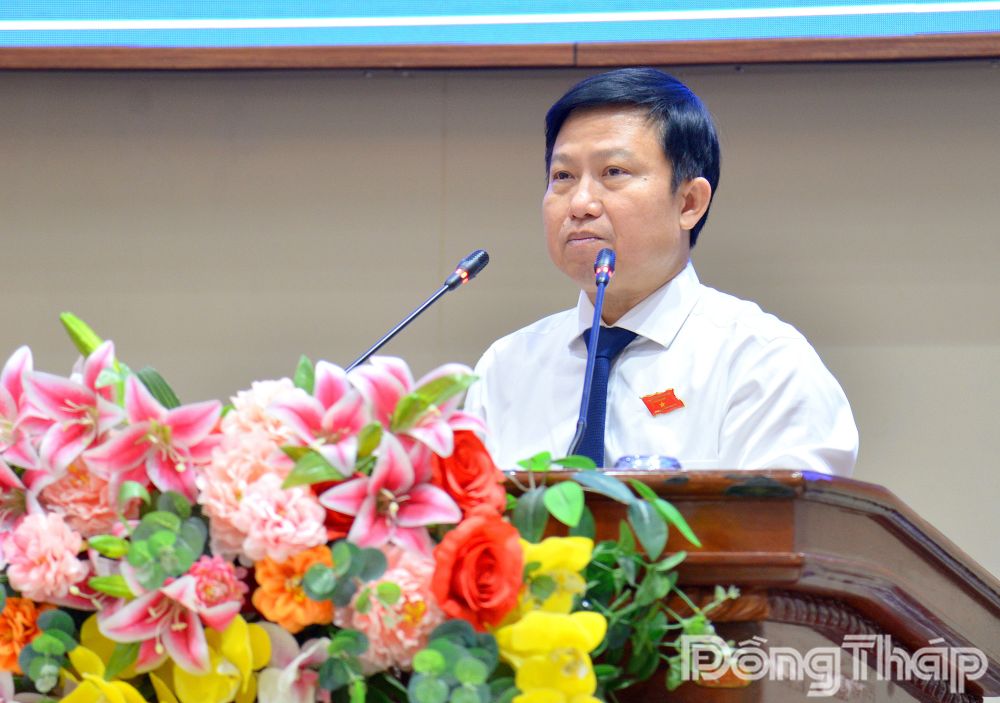
Ngo Chi Cuong also noted that alongside the results achieved, the province’s socio-economic development and management still face considerable difficulties and challenges that require focused efforts to address. Shortages of stone and sand for construction and landfilling have affected the progress of several key infrastructure projects. Compensation and land clearance for some projects remain problematic. Meanwhile, accelerating the disbursement of public investment funds and raising economic growth in the final months of the year continue to pose significant pressure.
These circumstances require the Provincial People’s Council to continue fulfilling its role in deciding important matters within its authority, while promptly considering and adopting appropriate mechanisms and policies to help resolve difficulties, mobilize resources and create favorable conditions for agencies and sectors at all levels to effectively carry out socio-economic development tasks. The province aims to achieve GRDP growth of at least 8.21% in 2026, laying the groundwork for achieving double-digit growth during the 2026-2030 period.
At this session, the Provincial People’s Council will consider, provide opinions on and decide on 24 submissions and accompanying draft resolutions, focusing on the following key areas:
Reviewing and completing mechanisms, policies, regulations and budget expenditure norms. These matters are directly related to the management, administration and implementation of tasks by agencies and units. They therefore need to be considered to ensure consistency, coordination and compliance with current regulations and the actual conditions of Dong Thap Province.
Considering social welfare policies and support for activities at the grassroots level. These policies target specific beneficiaries and are closely linked to grassroots activities and people’s livelihoods. Careful consideration of eligible beneficiaries and funding sources is needed to ensure effective implementation.
Considering policies on production development, the cooperative economy, and the effective use of land and infrastructure investment resources. These matters are linked to production development, the cooperative economy, investment attraction, and the management and use of the province’s land and infrastructure resources. They are intended to create more favorable conditions for production, business and socio-economic development in the province.
For the group of issues concerning the allocation and adjustment of financial and budgetary resources, public investment and implementation of national target programs, the session will consider amendments to the principles, criteria and norms for allocating public investment capital for the 2026-2030 period; adjustments and additions to the 2026 public investment plan; and the allocation and adjustment of funding for national target programs on drug prevention and control and cultural development. It will also consider regulations on certain types and levels of support for implementing national target programs during 2026-2030. These matters are directly related to the allocation and use of the province’s resources. Deputies are therefore asked to carefully study and discuss them to ensure the effective implementation of the resolutions.
Ngo Chi Cuong emphasized that a resolution sets out policy directions, while the results of its implementation are the ultimate goal. Whether a resolution truly helps remove bottlenecks, mobilize resources and create momentum for development is of great importance. Each resolution considered and decided at this session is intended not only to promptly address immediate issues, but also to help improve mechanisms and policies and provide a basis for the province to effectively carry out its political tasks in the period ahead. In light of these requirements, he asked deputies to focus on four issues:
First, every resolution must comply with the law, be clear and genuinely feasible. Each policy must fall within the proper authority, be consistent with the legal system, and clearly identify its scope of application, resources, implementation responsibilities and necessary conditions.
Second, the full scope of policy flexibility granted to us must be used, but the limits of the law must never be exceeded. We must not limit our authority out of concern about taking responsibility, but neither can we invoke creativity and innovation as grounds for acting contrary to the law. Therefore, any unclear provisions in the draft resolutions need to be thoroughly discussed.
Third, budget policies must consistently aim to mobilize and make the most effective use of the province’s development resources. When deciding on policies, due attention must be paid to the ability to balance available resources, the efficiency of their use and the actual impact of the policies.
Fourth, the adoption of resolutions must be linked to implementation and accountability for results. Once a resolution is adopted, there must be a lead agency or unit, clearly defined coordination responsibilities, adequate resources and conditions for implementation, as well as inspection and supervision to assess results.
The Provincial People’s Committee and the agencies submitting the proposals are asked to continue listening to and fully considering the deputies’ opinions, clearly explaining the issues raised, and carefully reviewing the draft resolutions to ensure that those submitted to the Provincial People’s Council for consideration and decision-making are of high quality, consistent and feasible.
The Provincial People’s Council committees are asked to continue fulfilling their appraisal role, focusing on clarifying issues of concern to deputies and providing sufficient information and grounds for deputies to consider and make decisions.
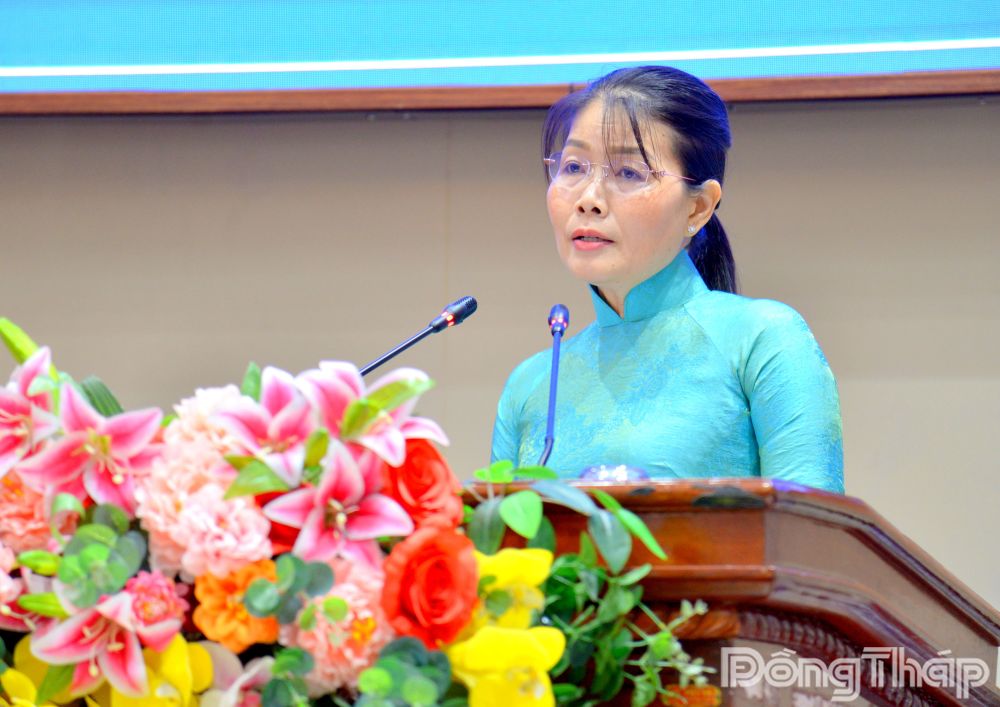
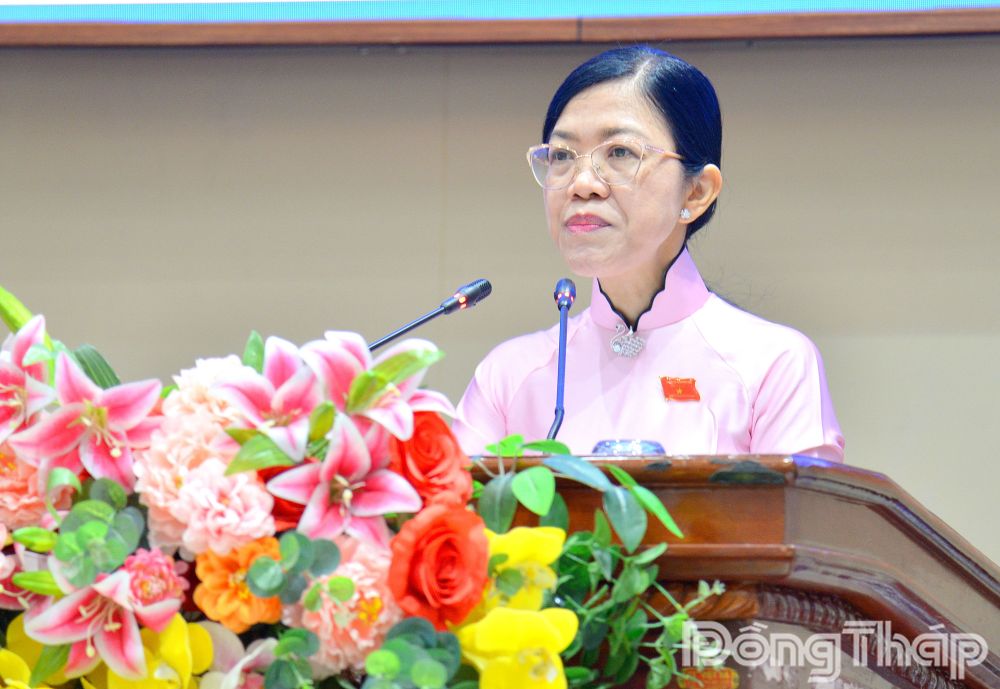
Following Ngo Chi Cuong’s opening remarks, provincial department and agency leaders presented summaries of the submissions and accompanying draft resolutions. Leaders of the Provincial People’s Council committees also presented appraisal reports on the draft resolutions.
Dong Thap Newspaper will continue to provide updates on the session.
By THU HOAI - LE MINH
Translated by ANH DUC