

DIVISION 8, MILITARY REGION 9:
Forging Resilience During the Training Season
(DTO) Amid the scorching heat of the Mekong Delta in these historic April days, training grounds across Regiment 2, Division 8 (Military Region 9) are buzzing with activity. New recruits are pushing through the intensity, determined to clinch top results in this year’s training season.
SPIRITED TRAINING SESSIONS UNDERWAY
To maintain such endurance, the Party Committee and Command of Regiment 2 have implemented flexible and innovative measures to safeguard soldiers’ health during training.
To maintain such endurance, the Regimental Command has implemented flexible and innovative measures to safeguard soldiers’ health without compromising training quality.
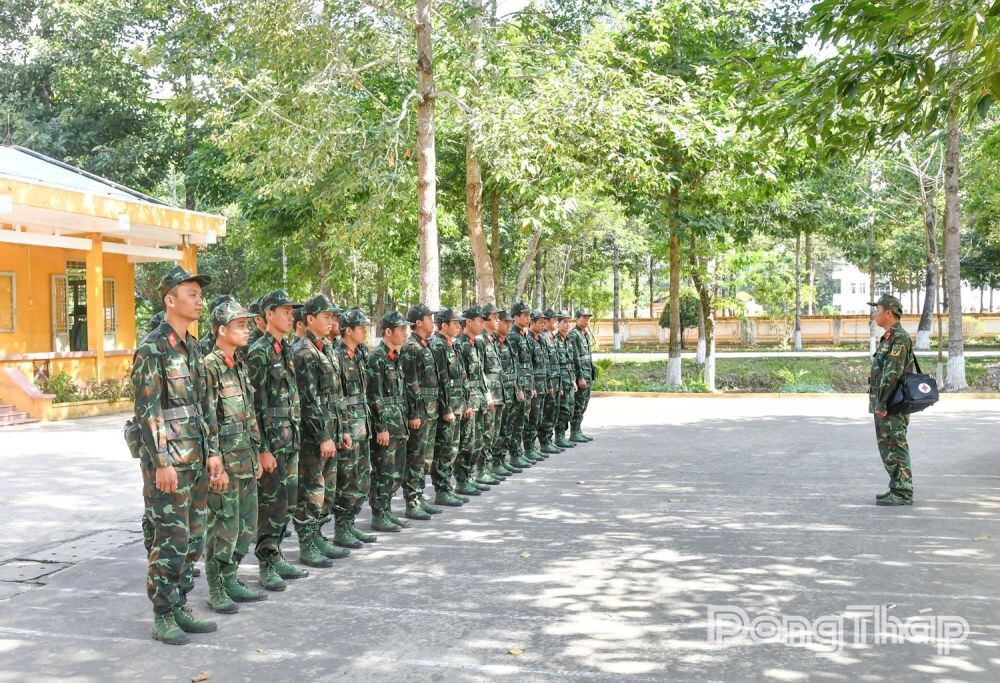
Since the onset of the heatwave earlier this year, Regiment 2 has strictly enforced directives from the Military Medical and Logistics-Technical Bureaus on heatstroke prevention and disease control. Beyond mere paperwork, these directives serve as a strategic roadmap for maintaining a healthy, combat-ready force.
Lieutenant Colonel Nguyen Trung Tính, Deputy Commander and Chief of Staff of Regiment 2, Division 8 shared: "We have identified heatstroke prevention as a central task in training new recruits. The unit has instructed Battalion 6 and other subordinates to flexibly adjust their schedules. High-intensity and high-movement activities are moved to the earliest hours of the morning and the latest hours of the afternoon to take advantage of the cooler weather."
This determination has been translated into action through scientifically adjusted schedules. Major Tran Thanh Phong, Political Officer of Battalion 6 under Regiment 2 of Division 8, stated: "Starting April 1, the unit transitioned to a new training schedule: The morning session runs from 6:30 AM to 10:30 AM, and the afternoon session from 2:00 PM to 5:00 PM.
This adjustment helps the troops avoid peak temperature hours while ensuring sufficient rest for physical recovery." One of the scientific innovations in the 2026 training season is the "gradual adaptation" roadmap to harsh conditions.
At the maneuver grounds, the "short break" method is strictly implemented. Instead of continuous training, the unit breaks down the duration: sessions of 35, 45, and then 60 minutes are interspersed with at least 15 minutes of rest in the shade.
During these breaks, officers combine hydrating the troops with observation to promptly detect any cases showing signs of fatigue.
In particular, the unit closely monitors "high-risk" individuals. These include personnel who are overweight or obese, as well as new recruits recently recovered from acute illnesses. These cases are prioritized with more rest and reduced physical intensity to gradually keep pace with the unit's general progress without endangering their health.
Captain Phan Ngoc Son, Platoon Leader of Platoon 7, Company 11, Battalion 6, Regiment 2, Division 8, analyzed: “We apply a training process of increasing intensity. Every 10 to 14 days, the tempo is adjusted so that the new recruits' thermoregulatory systems can acclimate to the heat.”
To ensure every service member acts as a "first responder," the unit has organized thorough training on first aid skills, ranging from recognizing mild symptoms (headaches, dizziness) to severe ones (convulsions, neurological disorders). Private Truong Hai Ly, a soldier of Squad 3, Platoon 7, Company 11, Battalion 6, Regiment 2, Division 8, confidently affirmed: “Now, if I see a comrade showing signs of fatigue or fainting, we know how to coordinate to help them, move them into the shade, and immediately perform respiratory and cardiac first aid.”
DETERMINATION TO ACHIEVE THE HIGHEST RESULTS
All efforts to combat the heat are directed toward a single goal: improving training quality, especially the "three explosions" drills. Based on previous years' experience, the Regiment Command noted that extreme weather often affects the psychology and fundamental techniques of soldiers, leading to lower test scores. Therefore, the close supervision of squad leaders plays a decisive role.
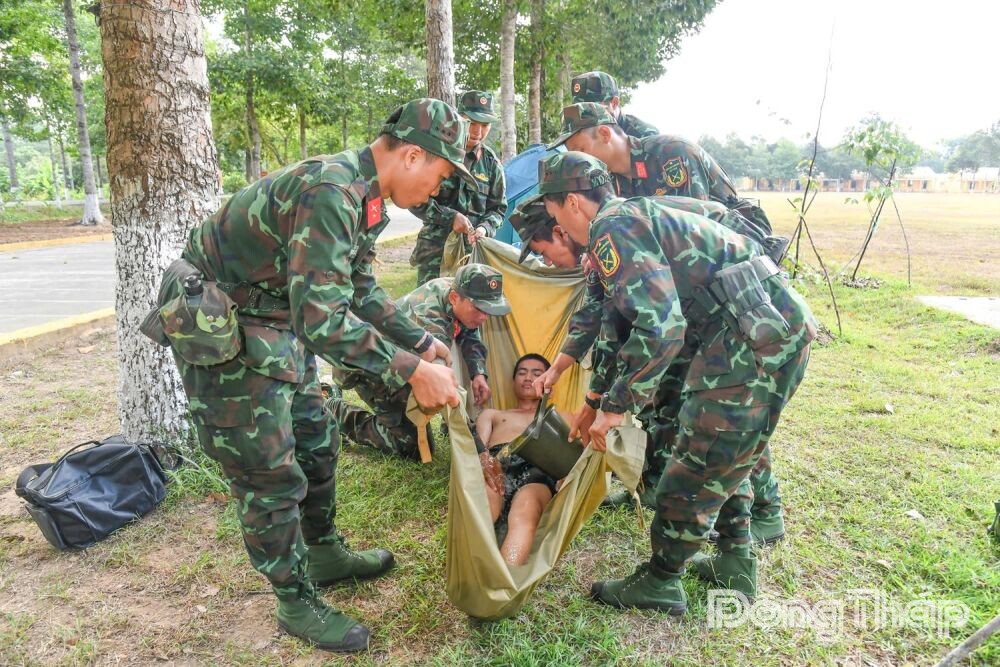
Sergeant Ngo Dinh Tri—Squad Leader of Squad 3, Platoon 7, Company 11, Battalion 6, Regiment 2, Division 8—stands shoulder-to-shoulder with his soldiers. Beyond maintaining discipline, he grasps their thoughts and promptly reports those showing fatigue to adjust intensity. This close involvement has forged a united collective, together overcoming the challenges of nature.
Sergeant Ngo Dinh Tri shared: "Through every meal, sleep, and daily habit, I always pay close attention to promptly detect cases showing signs of fatigue, psychological shifts, or health changes. During training, if I notice any comrade becoming exhausted, emotionally unstable, or showing pathological symptoms, I proactively propose that they pause training and move to the shade to rest; I then report immediately to higher command for professional medical examination and handling to ensure absolute safety for the troops."
On the maneuver grounds, containers of cool water and electrolyte solutions are always ready. Major Nguyen Van Tung (Professional Military Personnel)—Medic of the Logistics and Technical Board, Regiment 2, Division 8—stated: "Our advisory work on preventing heatstroke, heat exhaustion, and various diseases was deployed very early."
Beyond medication, the Military Medical team also focuses on the soldiers' attire. When heading to the maneuver grounds, soldiers must ensure their uniforms fit properly—neither too loose nor too tight—and always wear hats to protect the head.
"Daily, we regularly inspect the hygiene of the dining halls, kitchens, public restrooms, and waste pits to prevent disease. This is a crucial link in building resistance for the troops from within," shared Major Nguyen Van Tung.
Regarding the diet, the menu for hot days has undergone significant changes. Lieutenant Colonel Nguyen Trung Tinh, Deputy Commander and Chief of Staff of Regiment 2, Division 8, added: “We have directed the logistics agency to increase green vegetables and prepare cooling, easy-to-digest soups. Adequate drinking water must be provided and brought directly to the training position of each squad.”
In the event of an incident, the unit strictly adheres to the “Four Quicks” principle: Quick detection, quick classification, quick cooling, and quick transport. Senior Lieutenant Colonel Nguyen Van Phe, Chief of Military Medicine of Division 8, emphasized: “The first 30 minutes after detecting a soldier showing signs of staggering or dizziness is the ‘golden time.’
We must do everything to bring the body temperature below 39°C on-site by spraying cool water, sponging, or loosening equipment. Only when the temperature reaches a safe level do we proceed with transport to the infirmary to avoid brain damage.”
With proactiveness, science, and the dedication of officers at all levels, Regiment 2, Division 8 is writing new pages of achievement on the 2026 new recruit training field.
Upholding the tradition of a unit twice honored as a Hero, and the motto “Sun and rain forge resilient will,” every drop of sweat falling today is the precursor to the vibrant “Flowers of Determined Victory” in the upcoming final training evaluation.
By HUU TAI - HUYNH PHONG
Translated by X.QUANG