
Mobilizing Whole-of-Society Efforts to Search for and Identify Fallen Soldiers
(DTO) The National Steering Committee for the Search, Recovery and Identification of Martyrs’ Remains on June 25 held a nationwide online conference to review its performance in the first half of 2026 and set key targets for the remainder of the year.
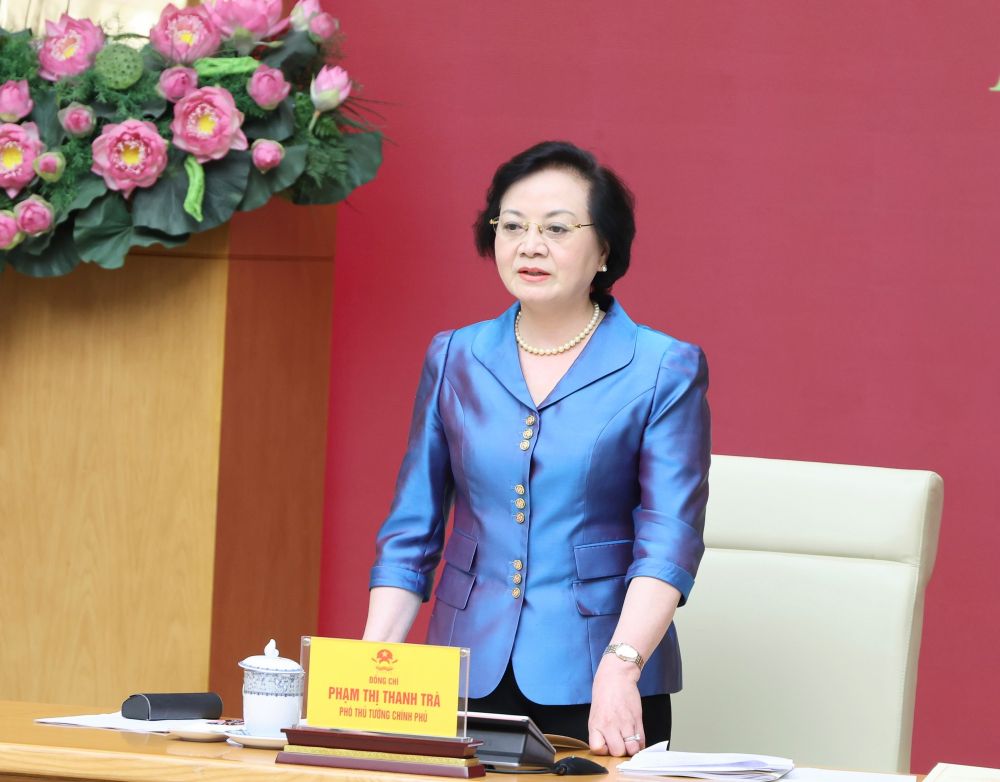
Ms. Pham Thi Thanh Tra, Secretary of the Communist Party of Vietnam (CPV) Central Committee, Deputy Prime Minister and Head of the National Steering Committee, chaired the event. Attending from the Dong Thap Province broadcasting hub was Mr. Pham Thanh Ngai, Deputy Secretary of the Provincial Party Committee and Chairman of the Provincial People’s Committee.
Implementing the Politburo’s directive and guidance from Party General Secretary To Lam, the National Steering Committee and its local chapters have carried out comprehensive and decisive measures to accelerate the search, recovery and identification of martyrs’ remains.
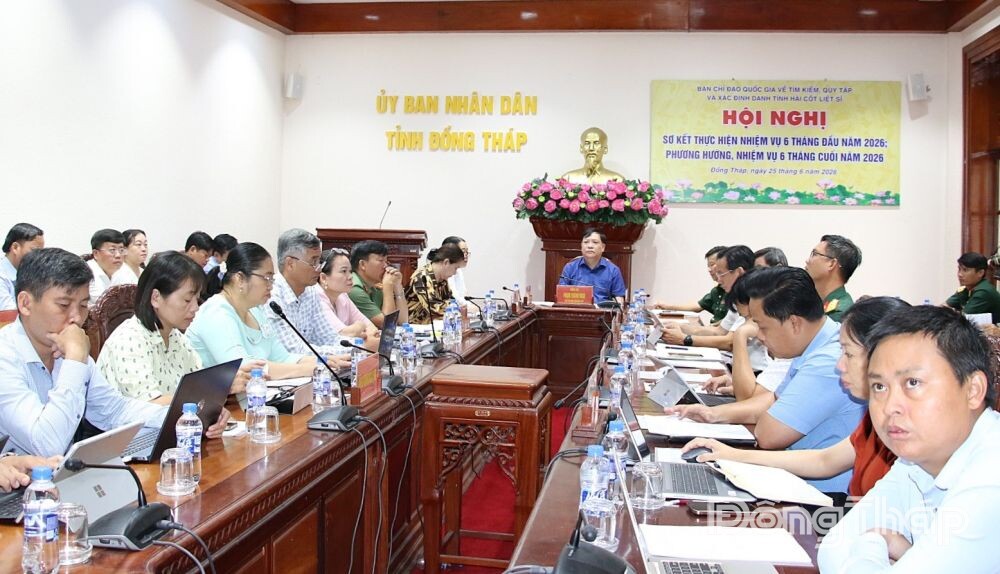
During the first six months of 2026, the committee successfully executed several core missions.
Notably, authorities established 297 teams comprising more than 3,600 personnel to collect samples from martyrs’ remains. They also launched the “500-Day Campaign to Accelerate the Search, Recovery and Identification of Martyrs’ Remains” and spearheaded a peak campaign to collect DNA samples from relatives of unidentified martyrs.
At the same time, agencies stepped up information dissemination, streamlined the processing of data relating to martyrs and their graves, and continued to refine databases serving the search, verification and identification process.
To date, steering committees at all levels have recovered 1,255 sets of martyrs’ remains across Vietnam, Laos, and Cambodia, while also locating three collective graves in Tuyen Quang Province.
The collection, analysis, and examination of DNA samples yielded significant milestones.
All seven military regions nationwide completed sample collection from 13,842 unidentified martyrs’ graves. The Ministry of Public Security collected 13,457 biological samples from relatives, analysed nearly 53,000 samples, and integrated the results of 17,473 samples into the national database. DNA testing facilities received 8,157 samples of remains and completed examinations on 92 samples.
In addition, relevant agencies reviewed, verified, and corrected information for 559 martyrs’ graves using empirical verification, thereby sharpening the accuracy of identification efforts.
The conference also highlighted critical bottlenecks facing the mission.
The volume of unrecovered remains and unidentified graves remains staggering. Meanwhile, the ambitious benchmarks set under the “500-Day Campaign” demand the fierce engagement of the entire political system.
Furthermore, information regarding original burial sites is dwindling and often inaccurate, while terrain and landmarks in many areas have changed over time.
Many locations remain contaminated by unexploded ordnance and wartime explosives, hampering search operations. In addition, the technical infrastructure, technology, and human resources of DNA testing facilities fall short of practical requirements.
Concluding the conference, Deputy Prime Minister Pham Thi Thanh Tra stressed that the year-end goals are to recover 3,000 sets of remains, complete biological sample collection from relatives and unidentified remains, and finalize the national database on martyrs to ensure seamless integration with the national population database.
In Dong Thap, the provincial steering committee has mobilized the Provincial Military Command, Team K91, and local authorities to intensify information dissemination, collection, and processing. The relevant forces have also conducted empirical field surveys and site verifications cooperating closely with Cambodian authorities and armed forces to execute search and recovery operations per established plans. As of June 23, 2026, the province had recovered 63 sets of martyrs’ remains, comprising 42 in Cambodia and 21 locally. Driving the “500-Day Campaign to Accelerate the Search, Recovery and Identification of Unidentified Martyrs’ Remains,” specialized task forces have exhumed 407 graves and secured 318 skeletal samples. The entire collection has been strictly managed, preserved, digitized, and archived, ensuring absolute safety and data security. |
To achieve these objectives, she urged steering committees at all levels to demonstrate strong determination, adopt innovative leadership, amplify communications efforts, and harness advanced science and technology to accelerate progress.
According to the Deputy Prime Minister, intensifying the search, recovery, and identification of remains is a top priority, which requires immediate investment to upgrade DNA testing technology.
Relevant ministries and sectors must coordinate closely, promptly prepare budget estimates for equipment procurement, and ensure all necessary logistics for the campaign. They must also expedite special preferential policies for severely wounded war veterans and children of martyrs.
The Deputy Prime Minister underscored that this paramount political mission demands the highest level of commitment to fulfill the nation's debt of gratitude, avoiding delays that could affect historical records and the interests of martyrs’ families.
She therefore called for unleashing the strength of the entire society, while bolstering international cooperation with Laos, Cambodia, and US partners to actively participate in this meaningful mission.
By PHUOC LOC
Translated by X.QUANG