

CELEBRATING THE 91st ANNIVERSARY OF THE VIETNAM MILITIA AND SELF-DEFENSE FORCE (March 28, 1935 - March 28, 2026):
Pride in the Nation’s Iron Wall
(DTO) 91 years ago, on March 28, 1935, at the 1st National Party Congress held in Macau (China), the Party issued a Resolution on the Self-Defense Units. This was the first Party resolution on organizing, directing, training, and operating the self-defense force.
It emphasized: “A strong self-defense force creates favorable conditions for later building guerrilla warfare and armed uprisings.” This marked a pivotal milestone, opening a new era and establishing a strategic guiding principle that continued throughout the revolutionary stages of the Party.
Following the issuance of the Resolution, workers’ and peasants’ self-defense teams began to emerge. These units later became the forerunners of the National Salvation Army and the Vietnam Propaganda Liberation Army.
GROWING THROUGH ADVERSITY
The Militia and Self-Defense Force (MSDF) is a mass armed force and one of the core components of the People’s Armed Forces. It protects the Party, local authorities, the lives and property of the people, and the assets of local agencies and organizations, and serves as the foundation for mobilizing the people in defending local areas during wartime.
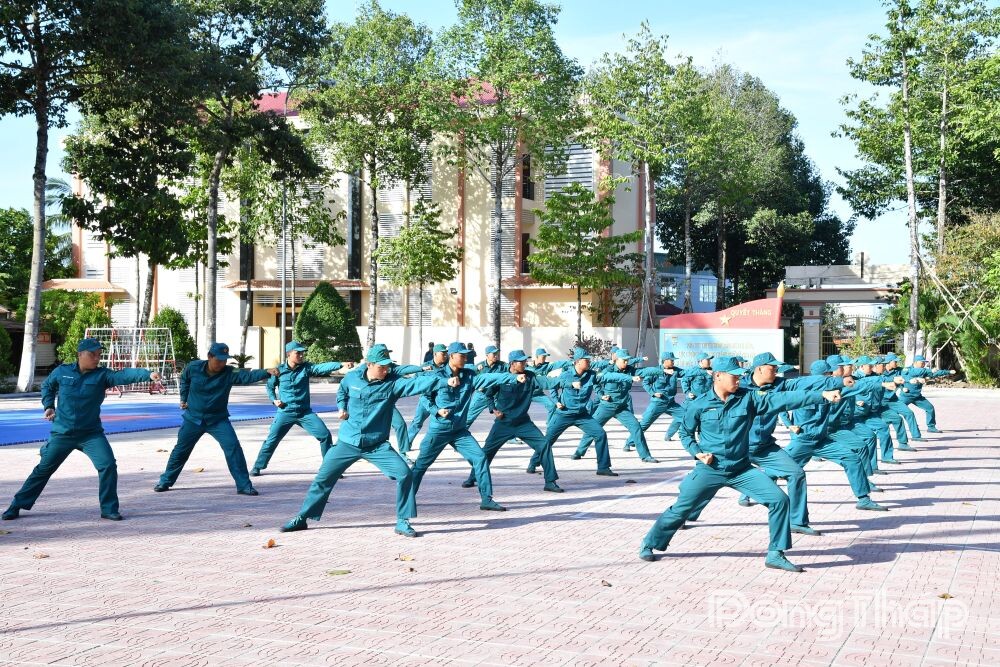
During the resistance wars against French colonialism, American imperialism, and the defense of the nation, the militia and guerrilla forces fought alongside main-force and local troops to form a vast people’s war posture, “a sky-net across the land.” They became a constant fear to the enemy, striking wherever the enemy went. The more the enemy expanded the war, the deeper they became mired, encircled, and worn down.
The militia and guerrilla forces also played a crucial role in eliminating enemy agents, dismantling their administrative structures, and destroying their rear bases, undermining the core objective of colonial and imperialist strategies: seizing the population and reinforcing puppet forces.
On all fronts, the MSDF enthusiastically supported, coordinated, and closely cooperated with the army and other forces, serving as the backbone of the all-people resistance in local areas. They assisted civilians in struggles against the enemy and acted as a vast reserve force ready to reinforce main-force units when needed.
In production fronts, the MSDF
“The militia, self-defense, and guerrilla forces belong to the entire nation. They are an invincible force, a solid iron wall of the country. No matter how fierce the enemy, once they collide with this force, this wall, they will surely be defeated.” |
practiced “plow in one hand, rifle in the other” and “hammer in one hand, rifle in the other,” working while staying ready to fight. They were exemplary and pioneering in production and defense efforts, coordinating with local forces to maintain security and protect the Party, authorities, people, and property. They upheld discipline and encouraged communities to follow Party guidelines and State laws.
During the country’s renewal period, the MSDF, together with the armed forces, continued to uphold revolutionary heroism, remaining united, proactive, resilient, and dedicated in labor, study, and duty performance. They met all assigned tasks, with many completed excellently or exceptionally, earning high recognition from Party committees, authorities, and the public.
To honor the contributions and achievements of the MSDF through various periods, the State has awarded the title “Hero of the People’s Armed Forces” to 366 collectives and 275 individuals. Outstanding examples include the Ngu Thuy Women’s Militia Company (Quang Binh), the Tien Hai Women’s Militia Company (Thai Binh), the Hoang Hoa Elderly Militia Platoon (Thanh Hoa), the guerrilla forces of the former Cu Chi District (Ho Chi Minh City), Giong Trom and Mo Cay Districts (formerly Ben Tre Province), along with thousands of other heroic individuals who have added glorious pages to the history of Vietnam’s people’s armed forces and the heroic Vietnamese nation.
Throughout its proud history, under the leadership of the Communist Party of Vietnam, generations of MSDF officers and members have remained steadfastly loyal to the country, the Party, the State, and the people. They have fought bravely and intelligently, worked diligently and creatively, and achieved many outstanding feats.
For their remarkable and exceptional contributions, the Vietnam Militia and Self-Defense Force has been presented with numerous prestigious awards. On the occasion of its 90th anniversary of building, fighting, and growing, the force was honored to receive the Ho Chi Minh Order.
THE NATION’S IRON CALL
In the battlefields of the South, the Militia and Self-Defense Force gradually took shape across villages, hamlets, plantations, and urban areas. Their main tasks included dismantling strategic hamlets, eliminating enemy agents, breaking oppressive control, building combat-ready villages and communes, and advancing the guerrilla warfare movement.
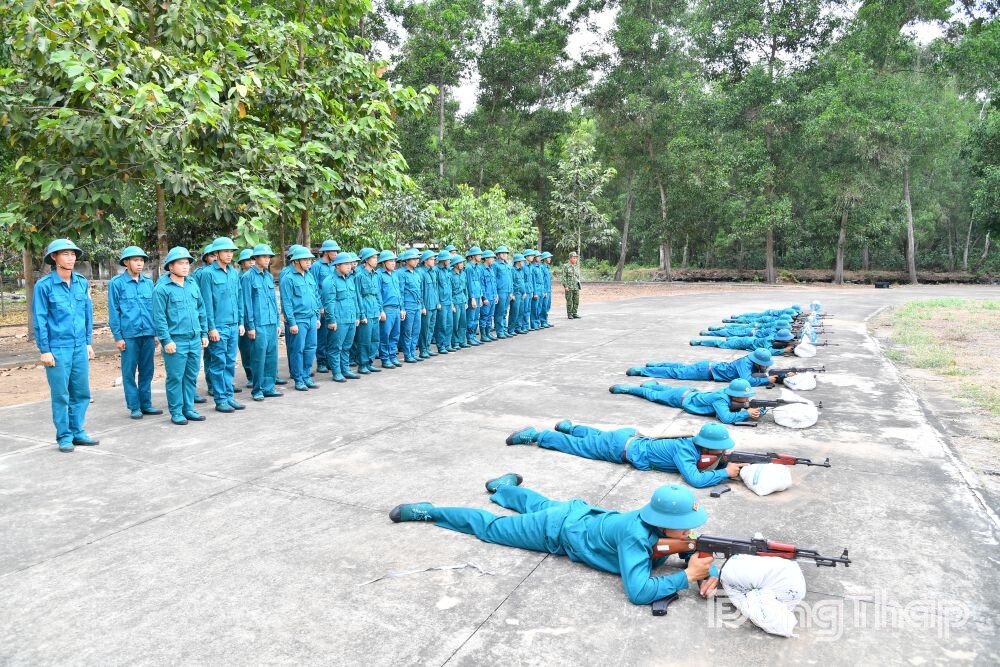
Militia and guerrilla forces coordinated with main-force and local troops in both offensive and counteroffensive operations. Their activities helped establish guerrilla bases, “guerrilla belts,” and “anti-U.S. belts.”
As a reserve force, they worked closely with local and main-force units to defeat enemy war strategies, enabling “communes to liberate communes, districts to liberate districts, and provinces to liberate provinces,” paving the way for the liberation of the South and national reunification.
In line with directives to intensify guerrilla warfare and seize the initiative on the battlefield from 1947 to 1950, the My Tho Provincial Militia Command was established, followed by district-level militia commands. Communes organized militia platoons to guard villages, fight the enemy, protect communities, and expand guerrilla activities.
Many successive victories involved the participation of guerrillas and local residents, such as the battles of Giong Dinh (January 14, 1947), Co Co (January 22, 1947), and Giong Dua (April 25, 1947).
From 1951 to 1954, the South intensified guerrilla warfare and continued to secure victories. In My Tho Province, now Dong Thap Province, the Provincial Party Committee strengthened activities by deploying forces deep into enemy-held areas to fight, conduct outreach, and attack key enemy positions to regain control.
Guerrilla forces expanded rapidly, carrying out operations across My Tho-Go Cong and participating in decisive battles that helped conclude the resistance war against French colonialism in victory.
During the resistance against the United States (1954-1975), the art of people’s warfare reached new heights, and the guerrilla forces grew stronger than ever.
They, together with local troops, held their ground, fought persistently, opened breakthroughs across districts, and took part in the 1975 General Offensive and Uprising that led to total victory.
After national reunification, the MSDF continued to excel in the new context. As one of the key components of the People’s Armed Forces, they took the lead in production, disaster response, epidemic control, and search and rescue. They remained the backbone in performing local military and defense tasks, safeguarding political security and social order, and contributing significantly to socioeconomic development.
Over 91 years of building, fighting, and growing, the militia and guerrilla forces have evolved from mass armed formations into an essential component of the Vietnam People’s Armed Forces. They have consistently fulfilled their duties with excellence, making immense contributions to national liberation, reunification, and the ongoing cause of building and firmly defending our beloved Vietnam.
By HONG LE
Translated by ANH DUC