
Prime Minister Le Minh Hung Outlines Sustainable Development Orientations for Dong Thap
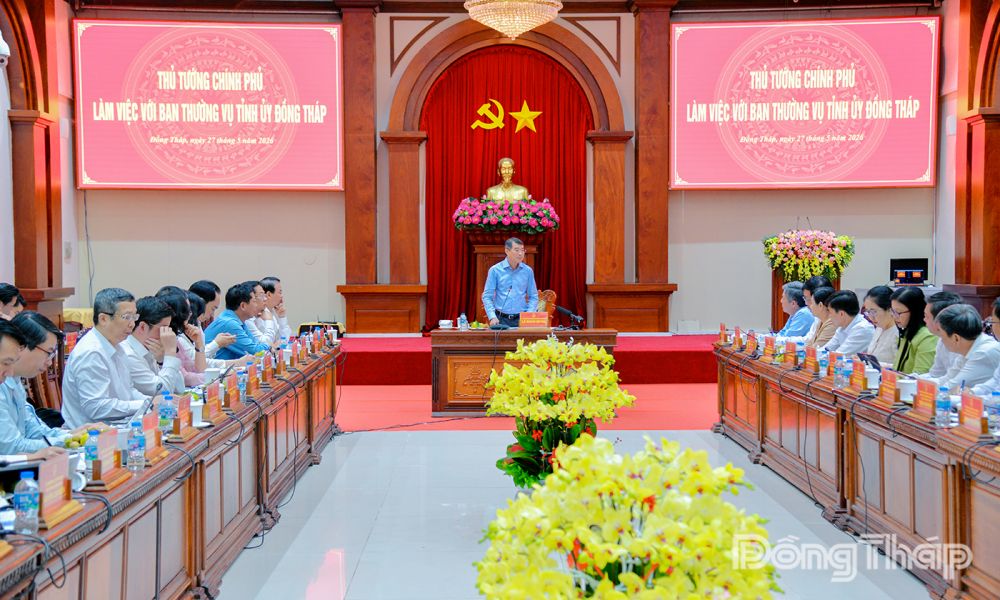
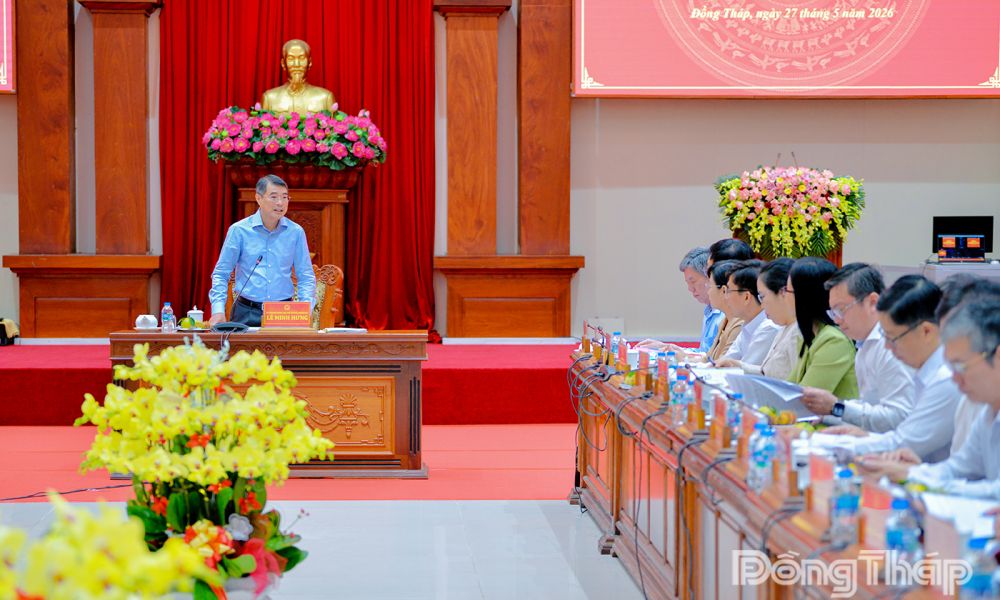
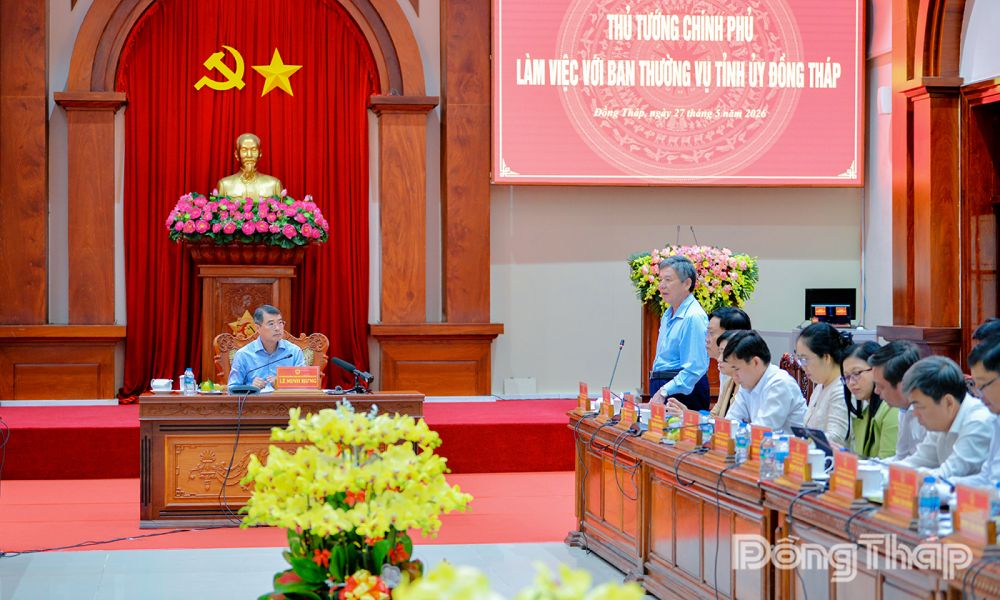
(DTO) On the morning of May 27, Politburo member and Prime Minister Le Minh Hung, along with a working delegation, held a working session with the Standing Committee of the Dong Thap Provincial Party Committee regarding the execution of socio-economic development tasks and the province’s double-digit growth target.
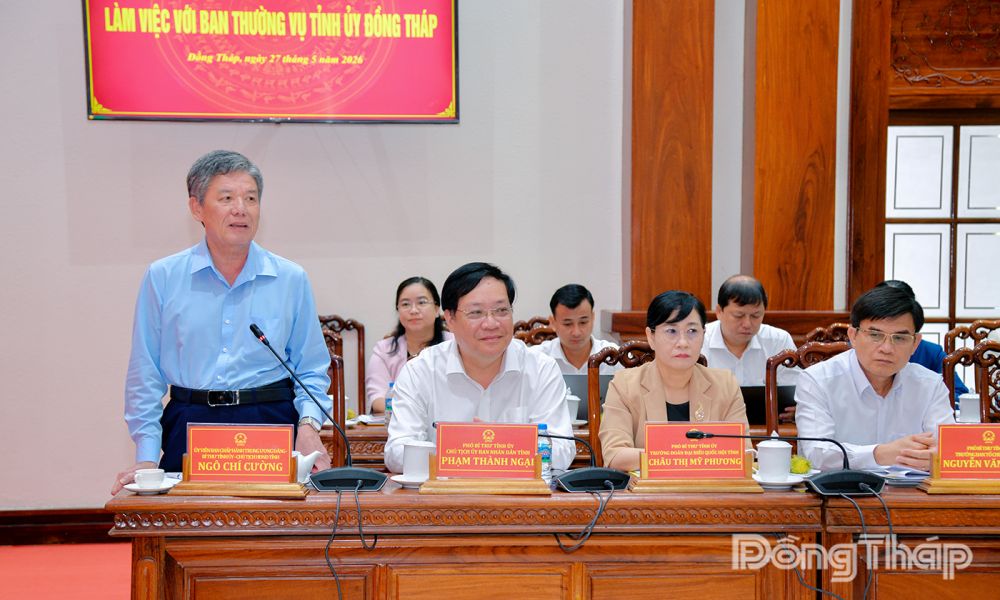
Welcoming and working with the delegation were Mr. Ngo Chi Cuong, member of the Party Central Committee, Secretary of the Provincial Party Committee, and Chairman of the Provincial People's Council, along with the deputy secretaries of the Provincial Party Committee.
In 2025 and the first five months of 2026, the province's socio-economic situation continued to show positive progress, with numerous sectors recovering and growing robustly. In 2025, Dong Thap fulfilled and exceeded 22 out of 24 major indicators; its GRDP growth rate reached 7.38%, surpassing the 6.75% recorded in 2024, ranking second in the Mekong Delta region and 23rd nationwide.
The scale of the provincial economy expanded to over VND286 trillion, ranking 16th out of 34 provinces and cities. Per capita GRDP stood at VND84 million, an increase of approximately VND7.2 million compared to 2024. The economic structure continued to shift in a positive direction, gradually reducing the proportion of agriculture while increasing those of the industry-construction and service sectors. Specifically, the agriculture, forestry, and fishery sector accounted for 34.9%, industry-construction for 25.2%, and services for 34.4%.
During the first quarter of 2026, the provincial economy maintained its growth momentum with a GRDP increase of 6.14%, while the GRDP value based on 2020 constant prices reached VND62.901 trillion. Although first-quarter growth did not meet the projected scenario, the province still possesses ample room and drivers for growth in the remaining quarters.
Against the backdrop of a highly volatile economic situation, the province has proactively reviewed and updated its growth scenarios for each quarter and the entire year. It has closely monitored developments in production, consumption, investment, exports, and public investment disbursement to promptly adjust management strategies accordingly.
Under the operational scenario, the province strives for a GRDP increase of over 8.04% in the second quarter of 2026, raising the first-half growth rate to approximately 7.05%, which will establish a vital foundation to fulfill the full-year GRDP growth target of 8% to 8.5%.
Following one year of operating the two-tier local government model, the province has finalized the consolidation of 12 provincial specialized agencies, while 408 specialized offices and equivalents have been newly established at the communal level. Public service institutions in the fields of education, healthcare, agriculture, and culture have continued to be rearranged in a streamlined manner to optimize operational efficiency. The handover of files, assets, and personnel has been fully executed, ensuring uninterrupted operations for citizens and enterprises.
Following the administrative merger, the province has been assigned 8,642 staffing positions, with 100% of provincial and communal officials and public servants holding a university degree or higher. Opinions and recommendations have been promptly resolved; professional and operational training and guidance have been strengthened; and priority support has been extended to communes whenever difficulties or obstacles arise during implementation.
Regarding the implementation of Resolution 57, Dong Thap has been assigned 261 tasks on the Central Government’s monitoring system. Many key tasks related to infrastructure, science and technology, innovation, and digital transformation have initially delivered positive results. The province has focused on refining mechanisms and policies on science and technology, innovation, and digital transformation; gradually perfecting the legal framework; and promoting technology application, digital transformation, and online public services, thereby laying a foundation for improving productivity, growth quality, and the effectiveness of state governance.
During the 2025–2026 period, the province is implementing 100 provincial-level science and technology tasks; supporting 48 enterprises in quality standardization; and developing 30 science and technology enterprises, 24 startups, and four incubators. Dong Thap’s Provincial Innovation Index (PII) in 2025 ranked 18th nationwide. However, investment resources, high-quality human resources, and commercialization capacity remain limited.
Dong Thap Province proposed that the Prime Minister direct ministries and central agencies to support the province in studying, completing procedures, and allocating resources for the Cho Gao Canal freshwater transfer project to supply water for the Go Cong freshwater zone during the 2026–2030 period.
The province also proposed that the Ministry of Agriculture and Environment and the Ministry of Finance submit to the Prime Minister for consideration and support from the central budget to implement five urgent and critical embankment projects to protect erosion-prone areas, with a total estimated investment of about VND2.538 trillion. Dong Thap further requested support from the central budget to complete five key projects on land measurement, land registration, the issuance of Land Use Right Certificates, and the development of land databases in communes and wards according to the approved list.
The province also proposed that the Ministry of Finance and the Ministry of Construction advise the Government to approve the list of expressway and national highway projects for medium-term public investment in the 2026–2030 period using central budget capital, with a total estimated funding demand of around VND45.8 trillion, as a basis for local authorities to proactively coordinate implementation.
In addition, Dong Thap proposed financial support from the central budget to help the locality complete the digitization and archiving of documents under the two-tier local government model. The province also proposed funding for public health check-up programs and support for deploying the Administrative Procedure Settlement Information System under the centralized model of ministries and central agencies.
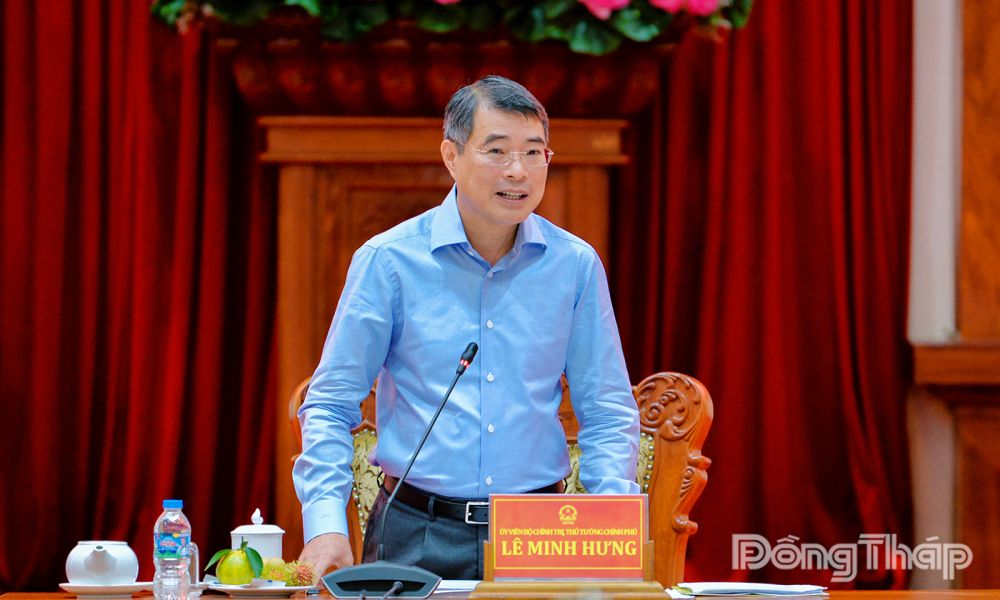
Speaking at the working session, Prime Minister Le Minh Hung acknowledged and commended the achievements Dong Thap has attained in recent years. The Prime Minister highly appreciated the province’s proposals, describing them as specific, pertinent, and focused on key issues related to socio-economic development associated with ensuring national defense and security. Despite numerous difficulties and challenges, Dong Thap has made strong efforts to overcome headwinds and achieved many positive results after nearly one year of operating the new administrative apparatus.
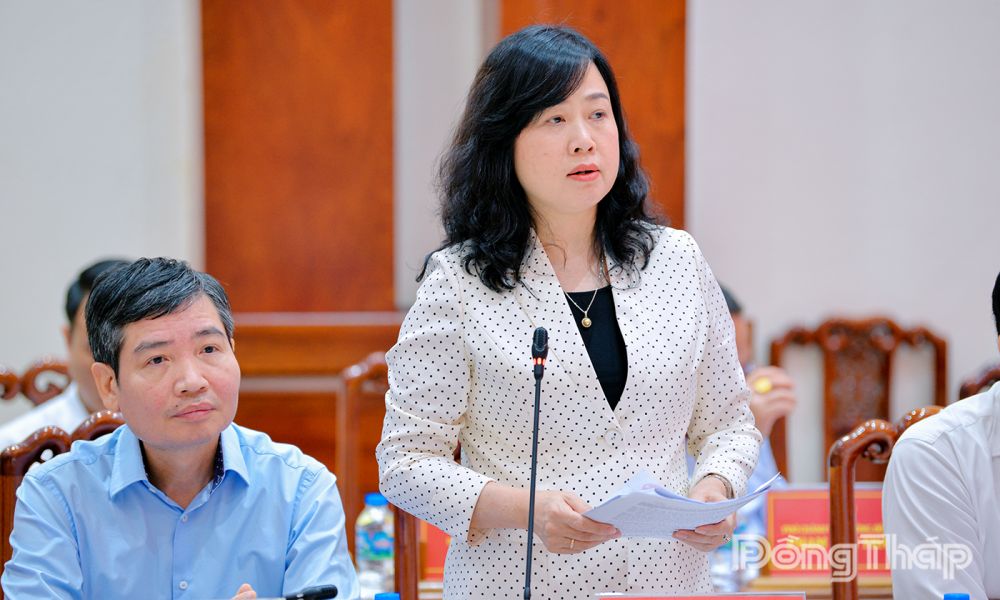
Prime Minister Le Minh Hung noted that alongside the achieved results, it is necessary to look directly at the limitations, particularly the highly restricted road and waterway transport infrastructure systems, which lead to high logistics costs and hinder the attraction of high-tech investment. This stands as a major bottleneck not only for Dong Thap but also for the entire Mekong Delta region. In addition, agricultural infrastructure faces headwinds from landslides, saltwater intrusion, and climate change. GRDP growth in the first quarter remained low, and budget revenue collection was unsustainable due to heavy reliance on agricultural exports. The economic structural shift toward industry and high-tech agriculture must be executed even more drastically. Dong Thap is also confronting a major challenge regarding human resources.
The Prime Minister requested Dong Thap Province to shift from a management mindset to toward development-oriented governance. The province needs to proactively propose mechanisms and policies to mobilize social resources and both domestic and foreign investors. It must formulate quantitative scenarios for each sector and assign specific responsibilities to members of the Standing Committee of the Provincial Party Committee to directly direct and supervise the final outcomes. The province should urgently update and supplement its provincial master plan in alignment with the national master plan and regional planning, including the sectors of energy, social housing, and transport infrastructure.
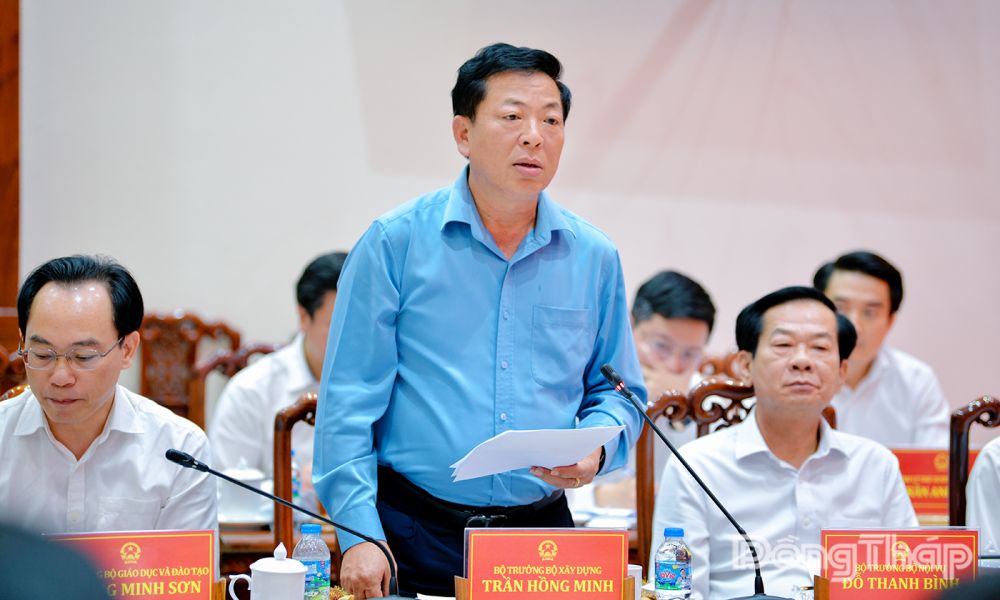
Notably, the Prime Minister required the province to research and identify a new growth model for Dong Thap on the basis of science and technology, innovation, and digital transformation, as well as the province's potential, competitive advantages, and available resources. Dong Thap needs to step up investment attraction into the processing and manufacturing industries along the Tien and Hau rivers. It must carefully review the conversion of rice land into industrial land to avoid delayed or unimplemented industrial planning projects; industrial parks must achieve an occupancy rate of at least 50%.
The province also needs to build agricultural product brands, promote deep processing, and grant planting area codes for export, particularly to the Chinese market. It should construct major logistics centers in Lap Vo, Tan Phuoc, Sa Dec, and Hong Ngu to serve as regional cargo transit points and develop the border trade economy. Additionally, it must develop eco-tourism, agricultural tourism, and rural tourism, especially characteristic and core products such as the Dong Thap Muoi Ecological Zone and Tram Chim National Park.
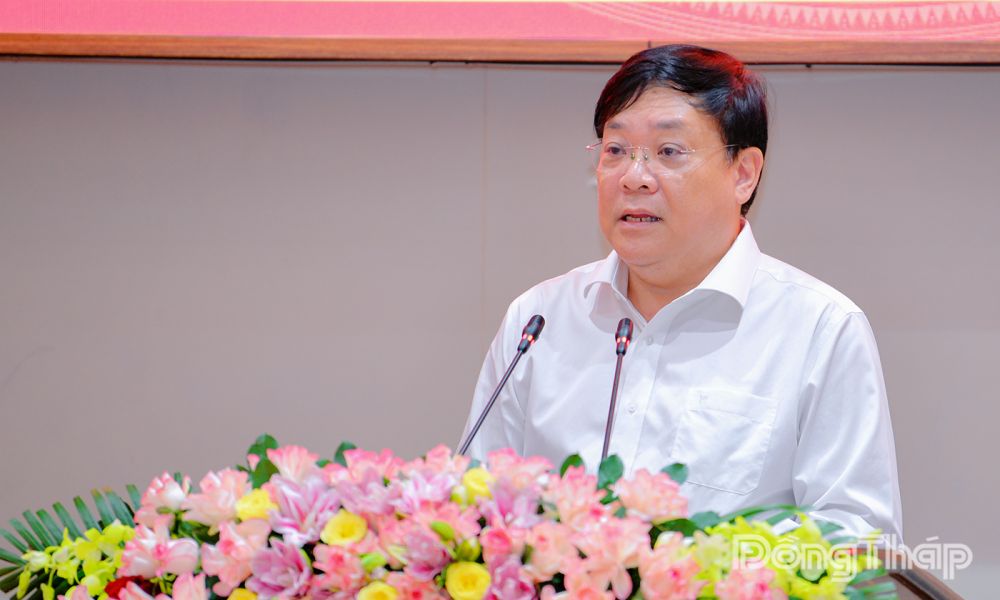
Dong Thap Province needs to focus on a comprehensive evaluation of the capacity, qualifications, and quantity of officials at departments and sectors, with a particular focus on the communal and ward levels. The objective is to determine whether the current workforce satisfies quality and quantity requirements. Based on the capacity assessment results, the province must execute the rearrangement, reassignment, and reinforcement of personnel from departments and sectors to localities. It should coordinate with the Ministry of Home Affairs and the Ho Chi Minh National Academy of Politics to organize regular training courses for communal and ward-level cadres, especially in crucial fields such as finance, land, science and technology, digital transformation, health management, and education.
The Prime Minister emphasized the need to boldly reassign officials who fail to meet job demands. This change is a necessary adjustment to guarantee apparatus efficiency; the province should not wait until the end of the year but needs to proactively conduct periodic quarterly reviews to have timely reassignment plans. Innovating the working style at all government levels, especially the communal and ward levels, toward being close to the people and supportive of enterprises is considered a vital resource to drive investment and local economic development.
Prime Minister Le Minh Hung encouraged Dong Thap Province to proactively commission specific research projects and products from ministries, research institutes, and universities. The effective execution of Resolution 57 is viewed as one of the solutions to improve the investment and business environment and generate important resources for the province's sustainable development. The Prime Minister noted that Dong Thap Province needs to accelerate the process of building the local database system, particularly land data.
At the same time, the province must elevate the quality of grassroots healthcare services, particularly in border communes. It should also review the actual demand of vocational schools to avoid wasteful investment. Social housing targets need to be adjusted toward prioritizing long-term, affordable leasing (lasting 15–20 years) for officials and workers, instead of focusing mainly on sales. Furthermore, it is essential to strengthen Party building, ensure security and order, and especially build a peaceful and friendly border with neighboring Cambodia.
Prime Minister Le Minh Hung requested ministries and central agencies to continue accompanying, supporting, and guiding Dong Thap Province in untangling and handling emerging difficulties and obstacles. At the same time, the province must focus highly and promote a proactive and decisive spirit in leadership and administration in order to fulfill the socio-economic development targets and tasks set for 2026 and the entire tenure.
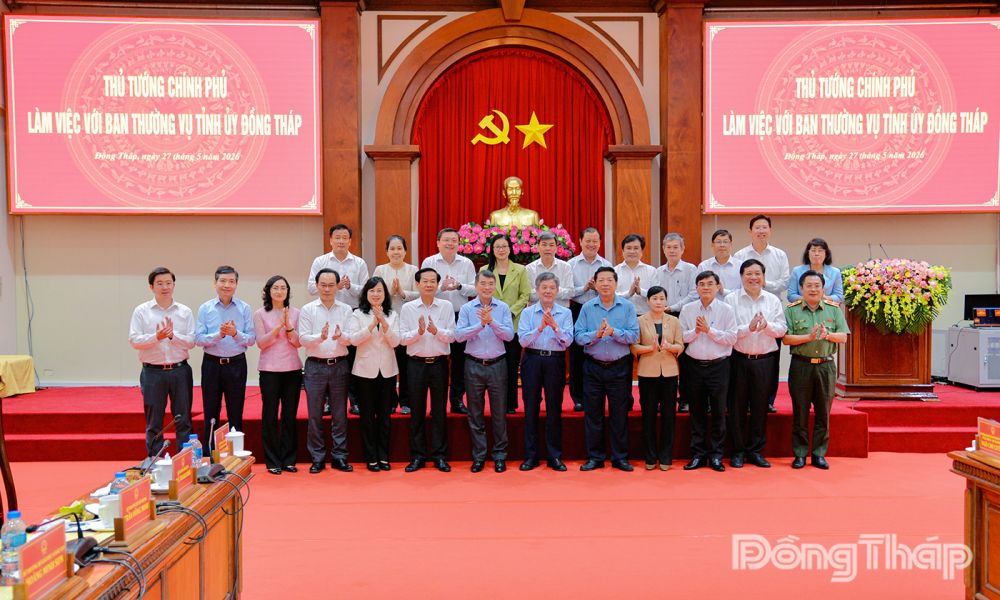
On behalf of the provincial leadership, Secretary Ngo Chi Cuong sincerely thanked the Prime Minister and the working delegation for visiting and working with the locality. Mr. Ngo Chi Cuong noted that the delegation had made many important contributions, particularly the close and practical strategic directions from the Prime Minister, which would help create momentum for Dong Thap’s socio-economic development in the coming period. The province fully acknowledged all directives and will promptly translate them into practical action programs and plans to effectively implement assigned tasks, striving to successfully achieve socio-economic development targets, Party building, and political system consolidation, thereby contributing to the successful implementation of the objectives set out in the Resolution of the Party Congress.
By HA NAM
Translated by X.QUANG