
Voters raise numerous concerns and recommendations to Dong Thap National Assembly Delegation
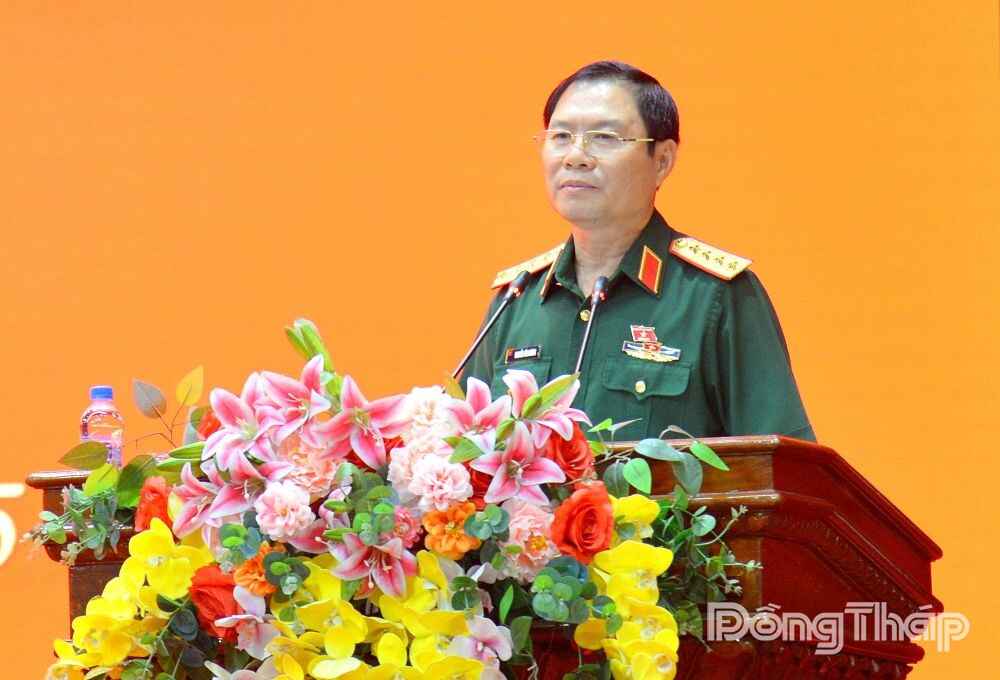
(DTO) On the morning of May 6, General Nguyen Tan Cuong – Member of the Party Central Committee, Chief of the General Staff of the Vietnam People’s Army, Deputy Minister of National Defense, and Member of the 16th National Assembly (NA) from Dong Thap Province – along with Ms. Chau Thi My Phuong – Deputy Secretary of the Provincial Party Committee and Head of the 16th Dong Thap Provincial NA Delegation.
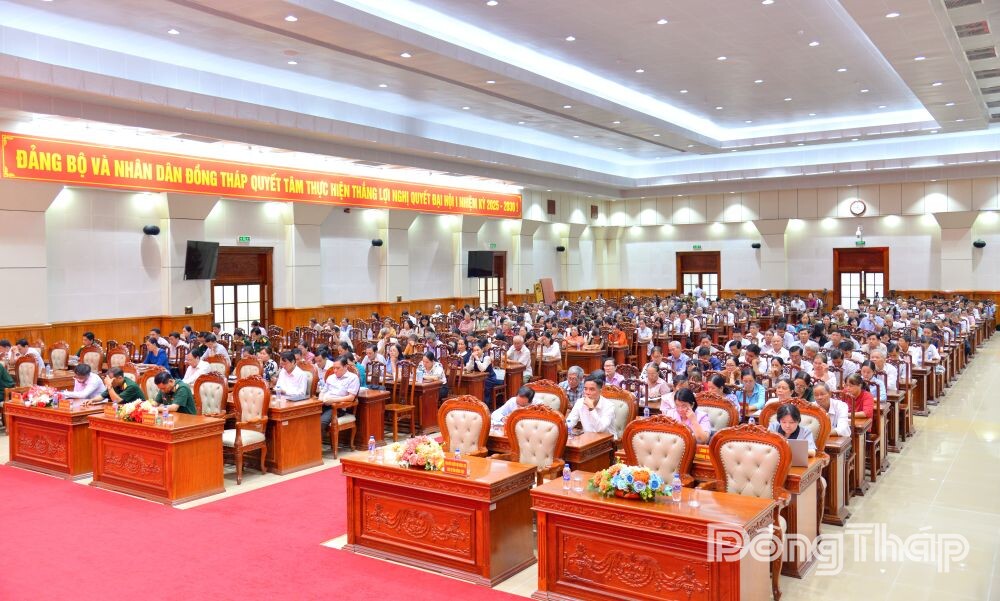
Joining the delegation were NA members from units 4, 5, and 6, including: Mr. Nguyen Minh Son, Mr. Ta Minh Tam, Ms. Nguyen Thị Hong Phuong, and Ms. Hoang Thi Tho. The meeting was attended by residents from My Tho, Dao Thanh, My Phong, Thoi Son, and Trung An wards.
At the event, voters viewed a video report summarizing the results of the First Session of the 16th National Assembly and the provincial delegation’s activities. Subsequently, they raised numerous petitions regarding issues of public interest and existing inadequacies to the provincial legislators.
VOTERS URGE PROVINCIAL NA MEMBERS TO INCREASE CONTRIBUTIONS AT NA SESSIONS
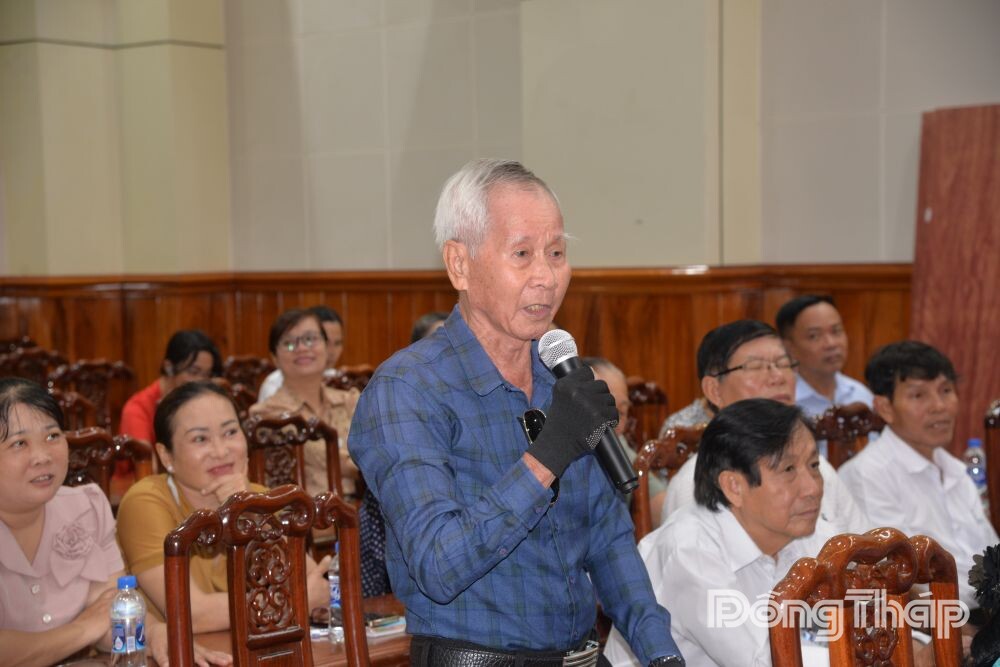
Many voters pointed out that although the public closely followed the First Session through the press and television, provincial deputies had not yet delivered many speeches on the floor. Voters expressed their desire for delegates to be more vocal in future sessions, specifically regarding local shortcomings and concerns raised by the electorate, so that citizens can witness their representatives fulfilling their campaign promises.
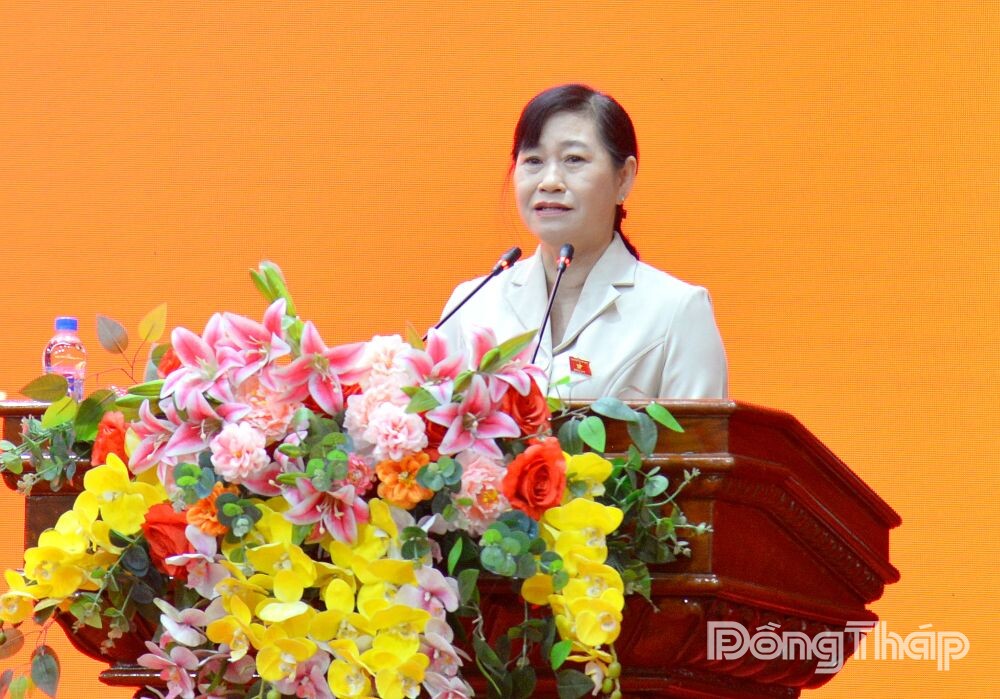
Addressing these concerns, Ms. Chau Thi My Phuong stated that throughout the 12-day First Session of the 16th National Assembly, all members of the Provincial NA Delegation strictly adhered to the working agenda and attended every session in full.
The deputies proactively researched documents and actively participated in discussions, effectively upholding their roles and responsibilities. They contributed to the consolidation of the State apparatus, decided on vital national issues, and promptly reflected the aspirations of the people.
Specifically, in discussion activities, the delegation contributed 44 opinions (30 in group discussions and 14 in the hall). These opinions were practical, constructive, and forward-looking, and were officially assimilated by competent authorities to refine contents submitted to the National Assembly.
Alongside discussion activities, the Dong Thap Delegation participated fully in all voting sessions on important issues of the meeting with a high sense of responsibility, ensuring compliance with regulations and broad consensus.
Ms. Chau Thi My Phuong also noted that to enhance operational quality, the Delegation has drafted a working plan for 2026. By the end of the year, a performance report will be presented to the voters, allowing the public to track and supervise the fulfillment of promises made by their representatives.
VOTERS URGE PROMPT REORGANIZATION OF HAMLETS AND RESIDENTIAL QUARTERS
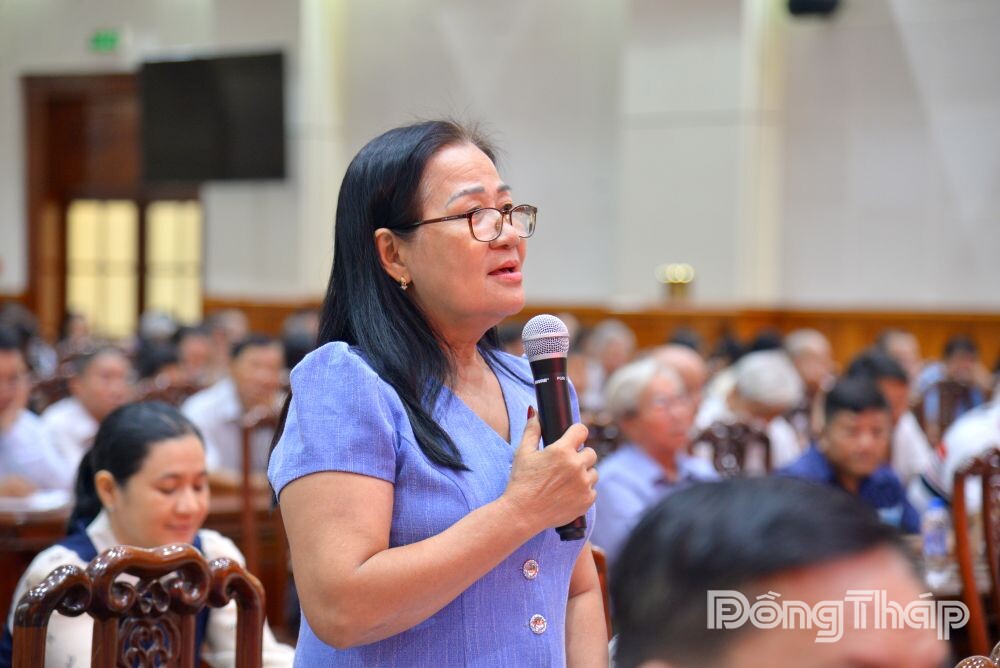
During the meeting, voters in My Tho Ward raised concerns regarding the state apparatus's restructuring. They noted that nearly a year after the provincial and communal mergers, specific guidelines for reorganizing hamlets and residential quarters have yet to be issued.
The electorate proposed that authorities prioritize this issue, particularly focusing on personnel arrangements for key positions (Secretaries and Heads of hamlets/residential quarters) to ensure efficiency in the new era, especially amid the digital transformation.
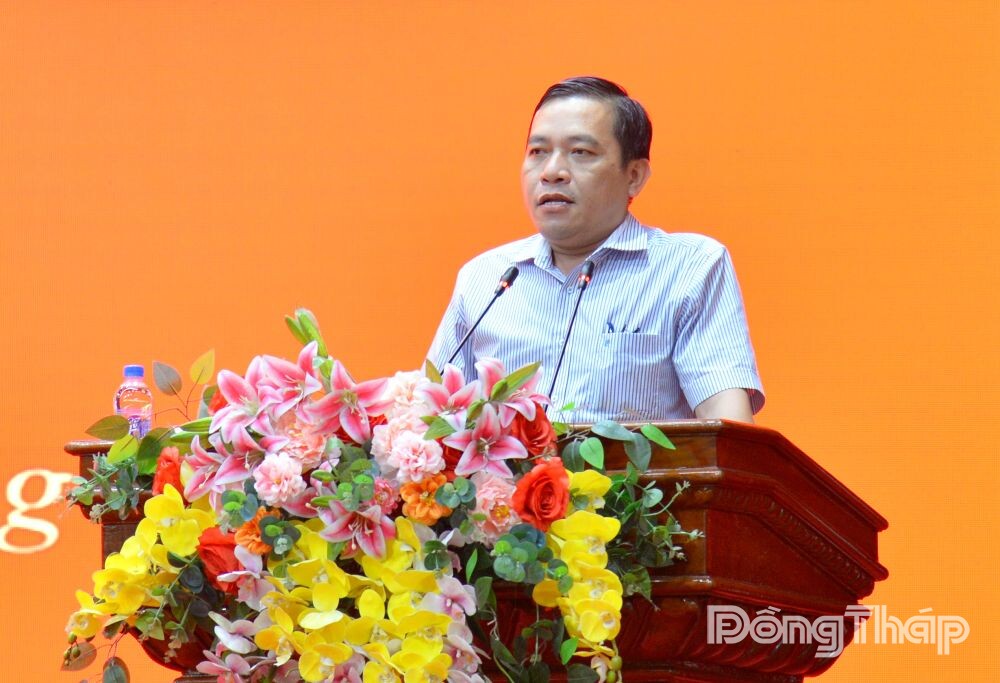
Responding to these issues, Mr. Ngo Huynh Quang Thai, Member of the Provincial Party Committee and Secretary of the My Tho Ward Party Committee, stated that following the Politburo’s direction, the restructuring of hamlets and residential quarters will be finalized in the second quarter of 2026.
Based on the Ministry of Home Affairs’ draft criteria for rearranging hamlets and residential quarters, the My Tho Ward Party Committee and People’s Committee have proactively reviewed and compiled statistics on the number of households meeting the requirements for establishing new hamlets and residential quarters. At the same time, the locality has reviewed the practical experience and sense of responsibility of grassroots officials and non-specialized staff to develop appropriate personnel arrangement plans.
Mr. Ngo Huynh Quang Thai noted that the tasks assigned to hamlets and residential quarters in the coming time will be increasingly demanding, particularly in accelerating digital transformation, requiring officials to promptly update their knowledge and skills in order to effectively perform their duties.
Recently, My Tho Ward has equipped hamlets and residential quarters with computers and Internet connections to support digital transformation efforts at the grassroots level. Regarding voters’ recommendations for training courses for Party cell secretaries and heads of hamlets and residential quarters, the Standing Board of the Ward Party Committee has planned to organize training sessions for grassroots officials after the reorganization process is completed in order to meet practical task requirements.
Regarding this issue, Ms. Chau Thi My Phuong also added that on May 5, 2026, the Provincial Party Standing Committee directed the provincial People’s Committee and relevant agencies to immediately develop a plan for reorganizing hamlets, clusters and residential quarters across the province. The province has proactively prepared its own plan for implementation instead of waiting for central guidance. Once official guidance is issued by central authorities, the province will make adjustments if necessary, as waiting until now would risk delaying the schedule.
Ms. Chau Thi My Phuong also requested leaders of communes and wards to closely monitor developments so that localities can promptly implement the provincial plan once issued, while also preparing personnel resources to meet future task requirements.
VOTERS URGE GREATER INVESTMENT IN PUBLIC HEALTHCARE
At the meeting, many voters called on provincial leaders to prioritize public healthcare, specifically periodic check-ups and disease screenings as outlined in the Politburo’s Resolution No. 72/NQ-TW (issued Sept 9, 2025) regarding breakthrough solutions for people's health protection and improvement.
Responding to voters’ concerns, Ms. Chau Thi My Phuong said that the Provincial Party Standing Committee had assigned the provincial People’s Committee to develop a plan for organizing regular health check-ups and disease screening programs for residents in accordance with the spirit of Resolution No. 72-NQ/TW.
Due to the huge funding requirement, estimated at nearly VND 1 trillion, provincial leaders have discussed and planned to allocate the budget according to a suitable roadmap. It is expected that in 2026, priority will be given to groups such as the elderly, vulnerable workers, poor and near-poor households, and people with disabilities. The province aims to expand the program by 2028 so that all residents can receive periodic health check-ups or screening for certain diseases.
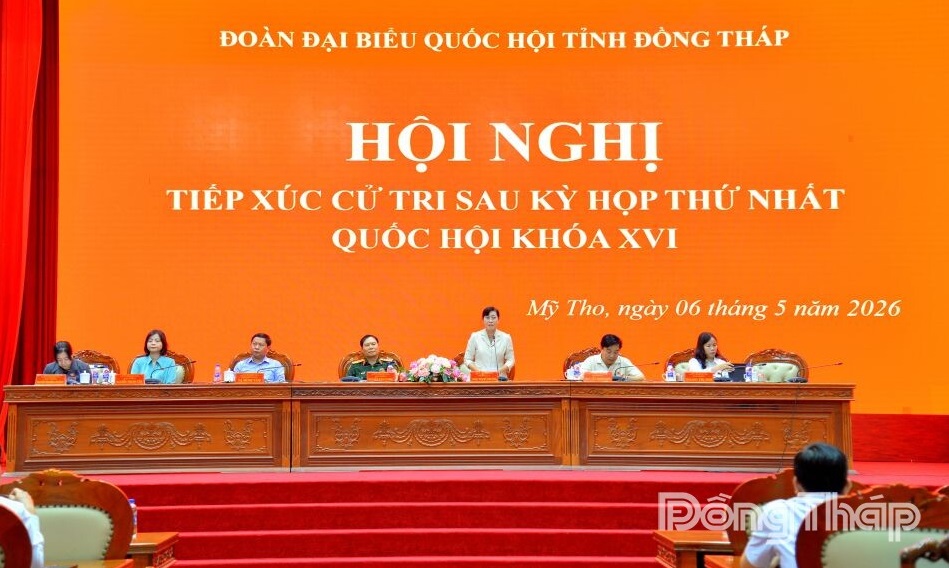
“Provincial leaders are very eager to better care for the health and well-being of the people. However, due to limited financial resources, even Ho Chi Minh City and Hanoi, despite their large budgets, have so far only been able to provide such services for certain groups rather than the entire population. Therefore, with the province’s limited budget revenues, we must implement the program step by step according to a roadmap. We sincerely hope voters will understand, share and sympathize with these difficulties,” Ms. Chau Thi My Phuong further explained.
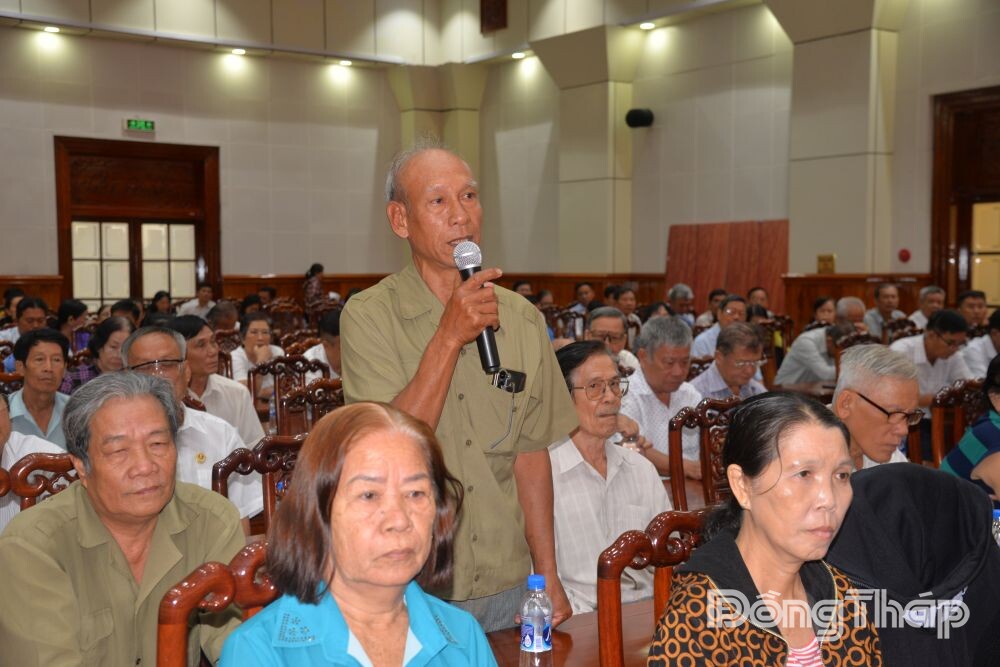
Speaking at the event, General Nguyen Tan Cuong highly commended the voters for their insights, which closely align with the country’s development and the province’s socio-economic goals. He urged provincial leaders to re-evaluate their double-digit growth scenarios and decisively implement the Resolution of the 14th National Party Congress, along with the Politburo’s strategic resolutions and Conclusion No. 18 of the 14th Central Committee's Second Plenum. The goal is to achieve all 2026 targets with the highest determination.
At the same time, the province should review, amend, supplement and finalize legal documents related to planning work and approved planning schemes, ensuring that provincial planning is aligned with regional and national master plans.
He stressed the need for a long-term vision in planning, particularly for urban areas, industrial parks, transport infrastructure and energy projects. Agriculture should also be planned specifically to avoid situations of bumper harvests leading to falling prices. Planning must go hand in hand with decentralization and delegation of authority. Effective planning would help resolve many other issues and avoid waste caused by repeated adjustments.
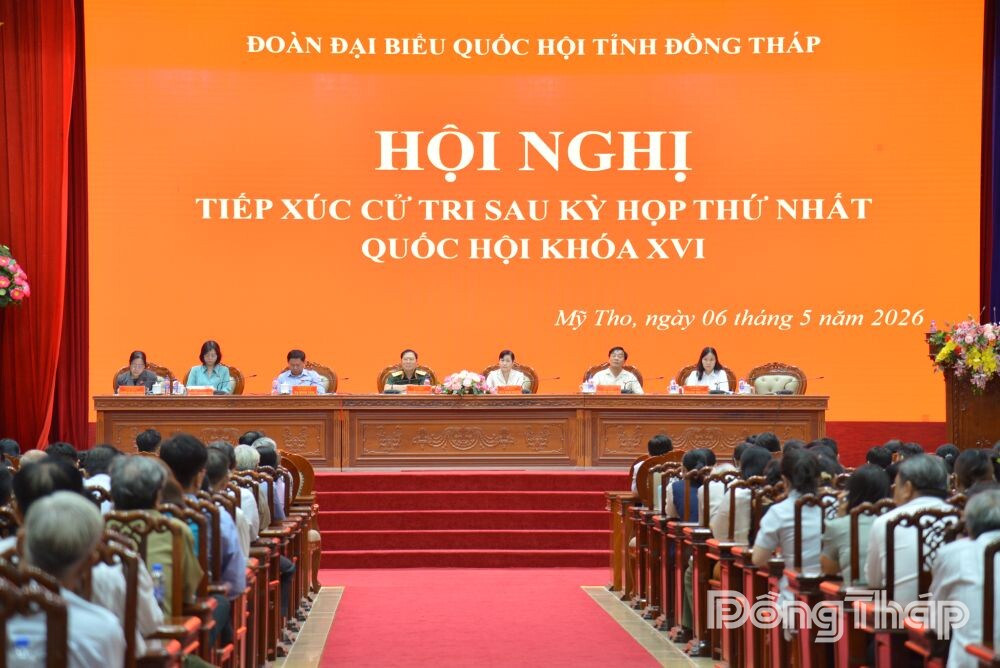
Concurrently, the province must prioritize key projects with strong spillover effects, such as completing the An Huu – Cao Lanh Expressway, investing in the Hong Ngu – Tra Vinh Expressway and coastal roads, and developing industrial clusters near border gates. By accurately assessing its potential and limitations, the province can maximize strengths within new development spaces. Accelerating investment appraisals, speeding up 2026 public investment disbursement, and addressing delayed projects are also crucial to driving socio-economic growth.
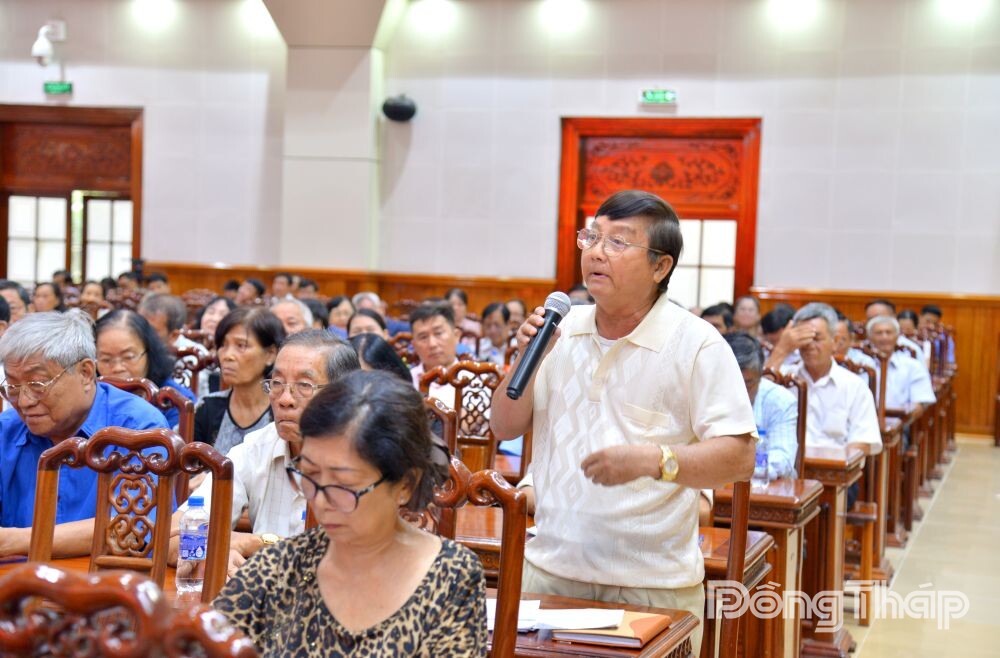
General Nguyen Tan Cuong also stressed the need for breakthrough policies to boost the private sector, accelerate digital transformation, and streamline administrative procedures to improve the business climate. Social welfare remains a priority, with a focus on supporting policy-beneficiary families and poor households while ensuring local social order and safety.
By THU HOAI - LE MINH
Translated by X.QUANG